

Image
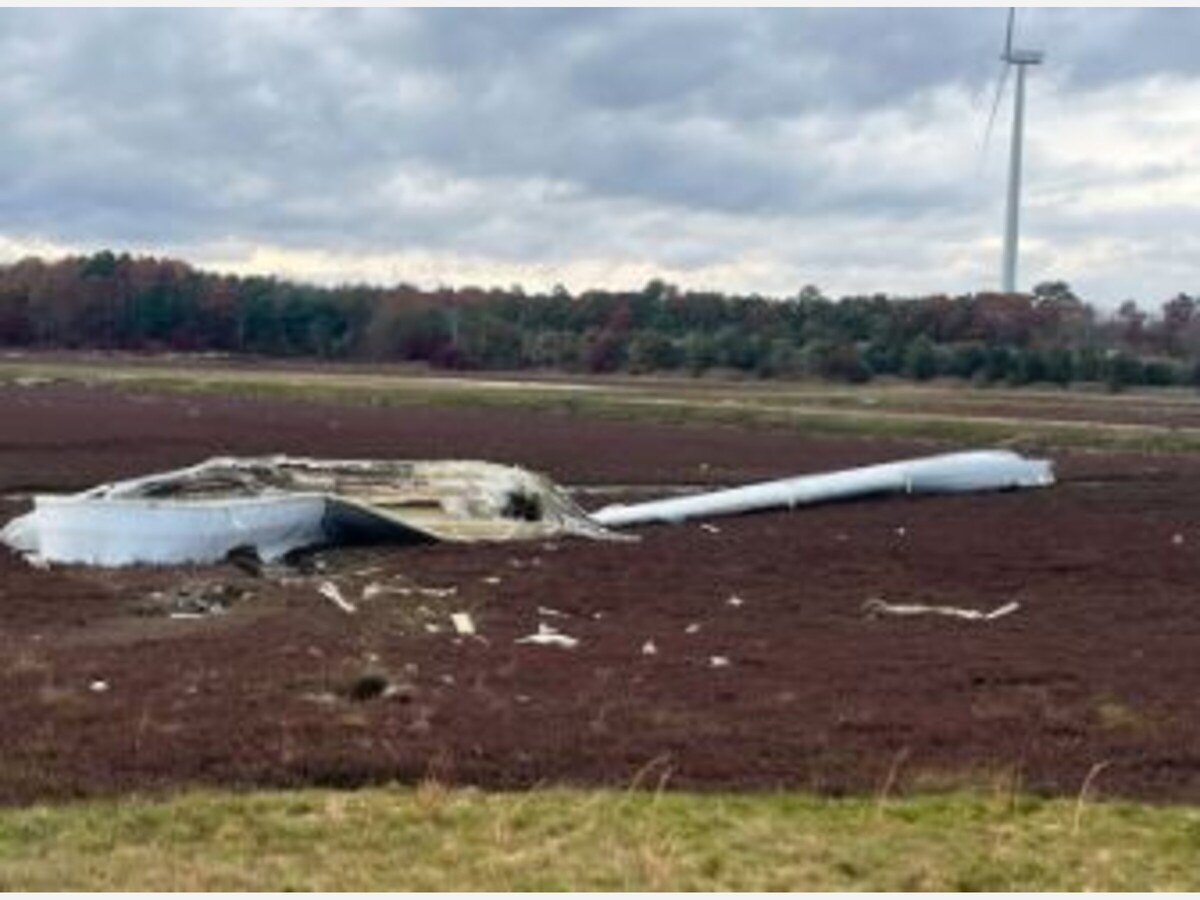
Above, a failed turbine blade that recently fell in a Plymouth cranberry bog.
Sam Drysdale | SHNS
Breaking from the focus on climate-driven policies that have guided the state’s energy agenda for nearly a decade, House members of the legislative committee that vets energy bills advanced sweeping legislation centered on addressing affordability and economic competitiveness issues.
Leaving behind policies championed by its former co-chair, Franklin State Rep. Jeff Roy, House members of the Joint Telecommunications, Utilities and Energy Committee on Wednesday voted 7-0, with four members reserving their rights, to move forward a 105-section measure redrafted by Chair Mark Cusack of Braintree.
The bill would establish an "affordability and competitiveness standard" to guide state energy decisions, scale back planned spending in the next Mass Save efficiency plan, and relax restrictions on gas and nuclear energy. Environmental advocates warn the proposal would undercut the state’s landmark climate laws, while supporters frame it as a necessary correction to rising energy costs.
Chair Mark Cusack of Braintree, Vice Chair Michael Kushmerek of Fitchburg, and Reps. Jeffrey Rosario Turco, Sean Reid, William MacGregor, Chynah Tyler, and David Allen Robertson voted for the bill.
Democrats Natalie Higgins of Leominster and Margaret Scarsdale of Pepperell, and Republicans Brad Jones of North Reading and Kimberly Ferguson of Holden reserved their rights, declining to take a position.
The bill, which Cusack opened for polling Monday, is expected to move next to the House Ways and Means Committee for further review. There's speculation the House might consider the bill next week, though a spokeswoman for Speaker Ron Mariano did not confirm the timeline when asked Wednesday.
The bill would shift oversight of clean energy procurements to a newly created Division of Clean Energy Procurement within the Department of Energy Resources, and reduce the size of the 2025–2027 Mass Save plan from $4.5 billion to $4 billion.
The measure would also remove the prohibition on Mass Save incentives for efficient gas heating systems and decouple the program from greenhouse gas reduction goals, returning it to a cost-effectiveness focus. Other provisions extend state offshore wind deadlines from 2027 to 2029, repeal restrictions on new nuclear power plant construction, and use clean peak energy credits to enhance hydropower’s market position.
Environmental groups have criticized the proposal. The Conservation Law Foundation warned the bill would "gut the state’s climate law," while the Green Energy Consumers Alliance urged lawmakers to oppose any reduction in emissions targets or energy efficiency funding.
“In a time where every Massachusetts resident is worried about their energy bills, this proposal is nothing short of betrayal,” Caitlin Peale Sloan, CLF Vice President for Massachusetts, said as voting began on the bill on Monday. “Rolling back the state’s commitments to affordable, clean energy is a gift to polluters and a slap in the face to every resident who deserves better. This retreat abandons progress and caves to short-term politics. It sends a dangerous message that our leaders lack the courage to stand by their promises.”



Sunny, with a high of 84 and low of 61 degrees. Sunny for the morning, partly cloudy during the afternoon, sunny in the evening, clear overnight.