53° and Patchy rain nearby



Image
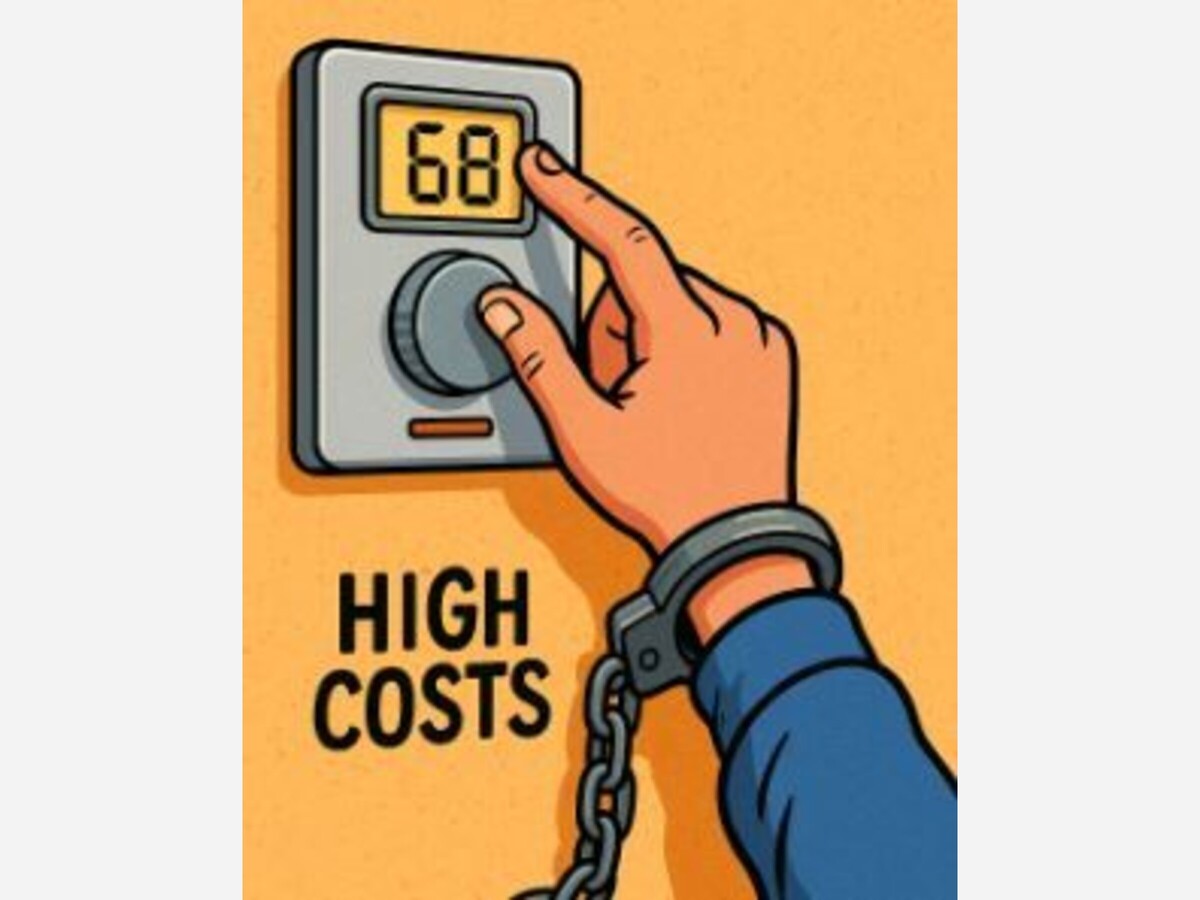
A House committee plans to remove a proposal to ease Massachusetts' mandatory 2030 climate target from an energy affordability bill and the House will likely not take up the bill before formal sessions end for the year on Wednesday, according to the House budget chief.
The 2030 limit — a legally binding requirement enacted in a 2021 climate law — obligates Massachusetts to reduce greenhouse gas emissions by at least 50% below 1990 levels by the end of the decade.
House members of the Telecommunications, Utilities and Energy Committee last week advanced a bill (H 3469) with language that would make the 2030 target non-binding under certain conditions and grant the state legal immunity if the goal is missed. Environmental and climate groups and advocates have criticized the change.
"I know that some of the rollback pieces on the 2030 numbers have, you know, gotten a lot of interest, a lot of energy behind it — no pun intended there — but we are certainly wanting to focus on affordability, and not necessarily on things of that nature," House Ways and Means Chairman Aaron Michlewitz told reporters. "I do not think it will be in this vehicle as we move forward."
The proposal instructed the secretary of energy and environmental affairs to assess why the state failed to meet its 2030 emissions limit. If the secretary determined the primary cause was "the actions or inactions of the federal government," then "the GHG emissions limits and sublimits established for 2030 shall be advisory in nature and unenforceable by or against the Commonwealth or any other person."
The section of the bill also "establishes immunity for the Commonwealth" if it does not achieve the legally mandated reductions.
In 2021, the most recent year with data available, state officials reported they had reduced emissions 28% below 1990 levels.
Climate advocates have warned that a shift like the one House members of TUE proposed would upend the enforceability of the state’s climate benchmark and could encourage state agencies to slow-walk or reverse emissions regulations. While Michlewitz made clear Monday that leadership is not prepared to reopen the 2030 mandate in this legislation, he said they plan to revisit the idea.
"We are probably going to have to have a conversation at some point related to whether we can meet our goals for 2030," he said. "I think that's a real challenge that we're facing, particularly when you have a federal government that is kind of trying to thwart us at every possible turn in relation to trying to get to those goals. So having that conversation is certainly coming to a head at some point, but I do not think it will be in this vehicle."
The wide-ranging bill, drafted by TUE House Chair Mark Cusack, represents an effort by House Democrats to redefine the state’s energy transition around affordability and competitiveness. In several key areas, it marks a significant shift from the climate-forward orientation of recent Massachusetts laws.
Among its provisions, the proposal would detach the Mass Save program from its emissions-reduction mandate and return it to a cost-effectiveness focus; lift the ban on Mass Save rebates for efficient gas heating systems; cap the next three-year plan at $4 billion; and cut the size of the 2025–2027 plan as currently proposed.
It also aims to restructure clean energy procurement by creating a Division of Clean Energy Procurement within the Department of Energy Resources, shifting long-term contracting authority away from electric distribution companies. The bill includes changes affecting hydropower incentives, renewable portfolio standards for competitive suppliers, and biomass eligibility under the municipal light plant clean energy standard. It would also repeal the requirement for statewide voter approval before building new nuclear facilities and extend the deadline for procuring 5,600 megawatts of offshore wind.
Commonwealth Beacon previously reported that Cusack said he had House Speaker Ron Mariano's support for the bill, though Mariano's spokesperson wouldn't commit to an official position. Asked Monday whether Cusack had spoken prematurely on Mariano's support, Michlewitz said his committee received the bill last week.
"I don't want to definitively speak for the speaker or for the chair himself," he said. "I do think that we still have some work to do on this bill… Ways and Means just got it Thursday. So I do think there's still a lot of work to be done."
Michlewitz spoke to reporters Monday after House leadership met earlier in the day.
When asked whether the affordability components — without the language related to the 2030 goals — could still move before the Legislature's six-week recess starts later this week, Michlewitz indicated they wouldn't.
"I think it's still something that we're working on, and I don't foresee us necessarily getting to it before the end of the week," he said. Instead, the chamber will spend its final days taking up the BRIGHT Act, a closeout supplemental budget for fiscal year 2025, a workplace violence prevention bill, and consideration of a constitutional Article V resolution.
Senate Ways and Means Chair Michael Rodrigues said Monday he has not reviewed the energy bill. "I have not, no," Rodrigues said. It's a similar answer to what Senate President Karen Spilka gave last week when asked about the proposal.
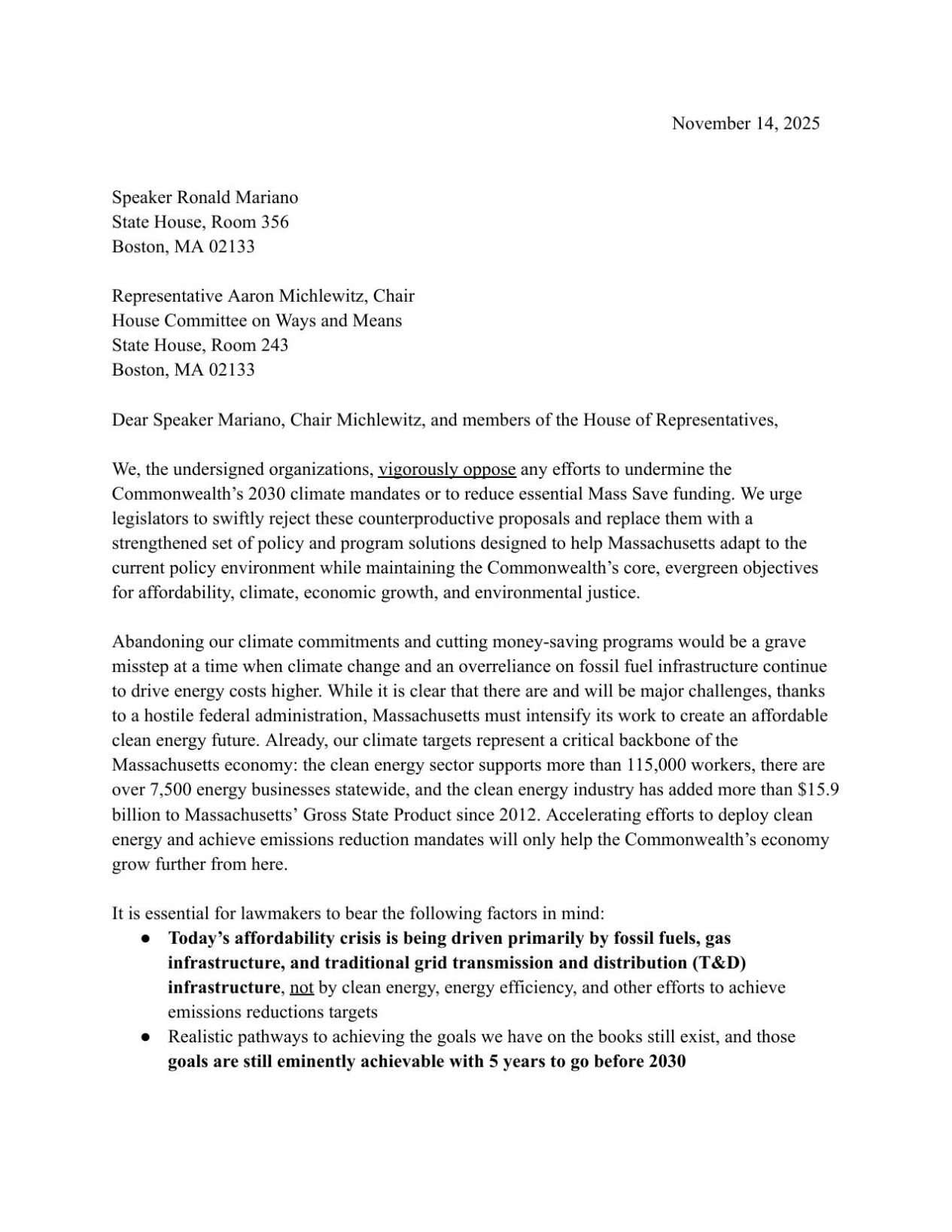
More than 100 climate and environmental groups have been urging the Legislature to reject any effort to weaken the 2030 mandate or reduce Mass Save funding. In a Nov. 14 letter to Mariano and Michlewitz, the groups wrote that they "vigorously oppose any efforts to undermine the Commonwealth's 2030 climate mandates or to reduce essential Mass Save funding."
"Abandoning our climate commitments and cutting money-saving programs would be a grave misstep at a time when climate change and an overreliance on fossil fuel infrastructure continue to drive energy costs higher," they wrote. "While it is clear that there are and will be major challenges, thanks to a hostile federal administration, Massachusetts must intensify its work to create an affordable clean energy future."


Cloudy , with a high of 72 and low of 40 degrees. Sunny for the morning, partly cloudy in the afternoon, overcast during the evening, fog overnight.