42° and Fog
Image
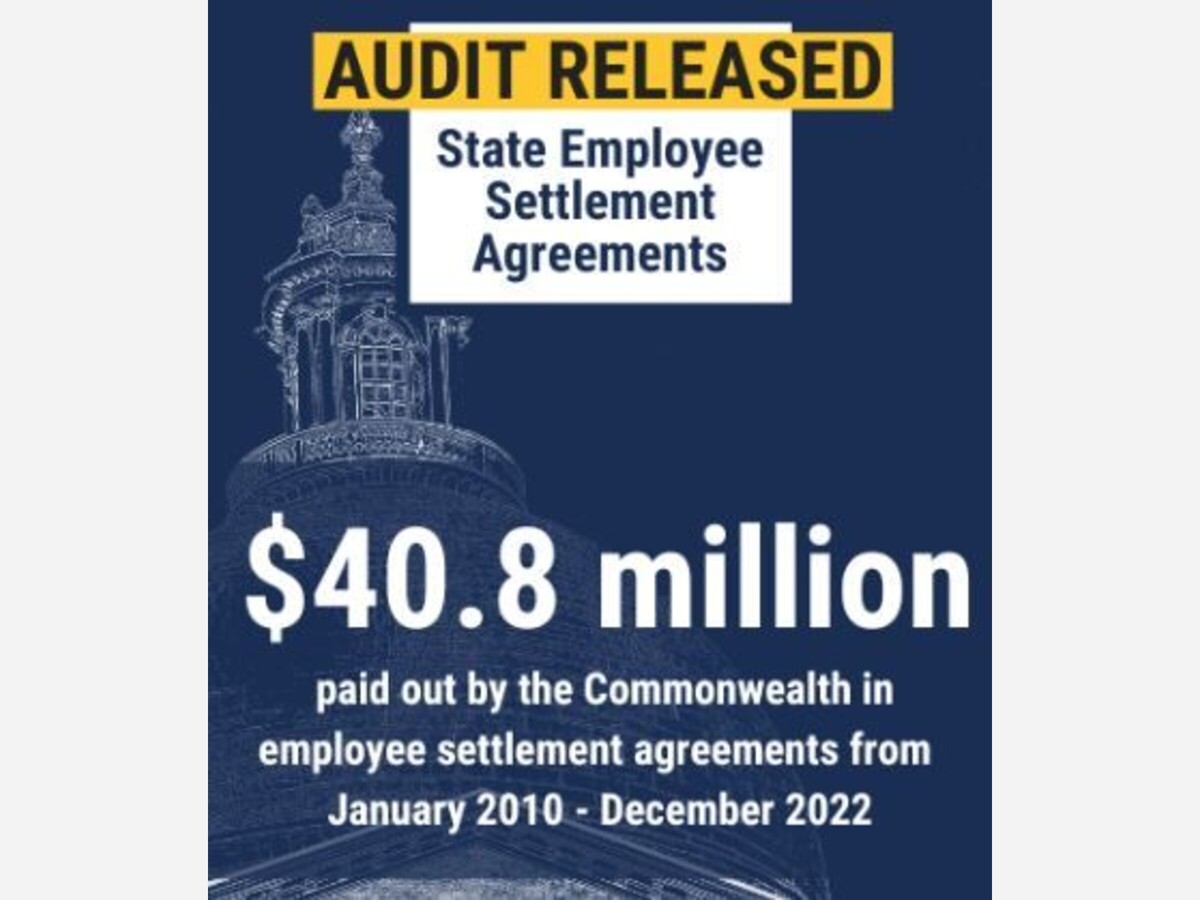



Wednesday, State Auditor Diana DiZoglio’s Office released an audit of settlement agreements, including the use of non-disclosure, non-disparagement, and similarly restrictive clauses in such agreements across 21 state agencies, including state universities and colleges, independent and quasi-state agencies, and constitutional offices.
This audit marks the second major report released by the Office of the State Auditor as part of a wide-ranging and comprehensive review of how state agencies handle settlement agreements with employees, particularly with respect to the use of non-disclosure, non-disparagement and similarly restrictive clauses. It covers the period from January 1, 2019 through December 31, 2024.
During that time, our audit found that the 21 agencies reviewed entered into at least 263 agreements totaling about $6.8 million in taxpayer funds. Perhaps most concerning is a $1.375 million taxpayer-funded settlement executed by the Massachusetts Port Authority (Massport) in 2022 that utilized a confidentiality and non-disparagement agreement concealing a host of allegations, including gender-based discrimination, disability-based discrimination, unequal pay, disparate treatment, and publishing false, damaging statements.
The audit found widespread inconsistencies with how agencies manage these settlements. Nineteen of the 21 agencies did not have written policies explaining how settlement agreements should be approved, documented, retained, or tracked. Without clear, documented policies, agencies cannot ensure settlements are handled fairly, legally, or consistently. This lack of structure also makes it difficult for the public to understand how their tax dollars are spent, while increasing the risk of accounting errors because the Office of the Comptroller may not be able to properly review settlement payments.
Moreover, the audit found that 20 of the 21 agencies had no written policies governing when or how non-disclosure, non-disparagement, or other confidentiality language should or shouldn’t be used in settlement agreements. Without clear guidance, there is a risk that confidentiality clauses may hide harassment, discrimination, or other unlawful conduct, potentially allowing bad behavior by perpetrators to persist while forcing potential victims into silence.
In addition, the absence of documented policies creates the risk that these confidentiality clauses may conceal patterns of poor management or misconduct within state agencies, exposing employees to continued abuse and increasing the likelihood that taxpayers will bear the cost of ongoing settlements or litigation.
The audit also found that 3 agencies[1] failed to provide, or failed to provide in a timely manner, all requested settlement agreements to the Office of the State Auditor, despite the office’s clear legal authority to receive and review them. Because key records were missing, or received just last week, as this report was being finalized, our auditors could not review these settlement agreements to determine their compliance with policies and regulations.
Three agencies[2] also omitted 12 settlement agreements from the lists they submitted, totaling more than $492,000 in taxpayer dollars. Furthermore, our review of Massport raises concerns that there may be additional settlements that have not been disclosed or found through our review.
The audit also found that 7 agencies[3] failed to report 13 settlement agreements to the Office of the Comptroller, as required by state regulation. Failing to report settlements to the Office of the Comptroller is not only a violation of state regulation, but it can also lead to improper accounting, incorrect tax reporting, and a public perception that agencies may be purposefully seeking to conceal these records to prevent scrutiny.
Additionally, several agencies could not provide appropriate documentation connected to 37 settlement agreements that included confidentiality clauses. Failure to create or retain complaint records, or documentation that justifies the use of confidentiality clauses, raises concerns that confidentiality clauses could be used to cover up allegations of misconduct. The rationale regarding the utilization of such language should be clearly documented and maintained.
Finally, the Office of the Attorney General and Massport improperly shared sensitive information about the audit with their employees and retirees who were not involved in the audit – jeopardizing the integrity of the audit process with respect to Generally Accepted Government Auditing Standards. During the audit process, auditors requested access to personnel records, which they are legally authorized to review. The action taken by both agencies obstructed our access to records as authorized by Chapter 11, Section 12 of the Massachusetts General Laws. Contrary to the clear language of the law, these agencies sent letters informing employees and retirees that these specific records were being reviewed and invited employees to object to the audit and quash our office’s review. our office’s review.
By doing so, they interfered with lawful oversight and hampered the audit process, while delaying, and in Massport’s case blocking, our statutorily authorized access to some of these records required to conduct our audit.
“Taxpayer-funded non-disclosure agreements continue to be used across state agencies and can provide cover for alleged unlawful and unethical behavior,” said Auditor DiZoglio. “While this Administration’s new policies pertaining to the use of these agreements have been a somewhat helpful first step, it is unacceptable that the Legislature and Governor have still not yet worked to pass a law banning the abuse of taxpayer-funded non-disclosure agreements. It’s beyond past time that we stop allowing taxpayer dollars to fund the silencing of public employees across this Commonwealth.”


Moderate rain, with a high of 75 and low of 41 degrees. Sunny in the morning, partly cloudy in the afternoon, patchy rain nearby in the evening, fog overnight.