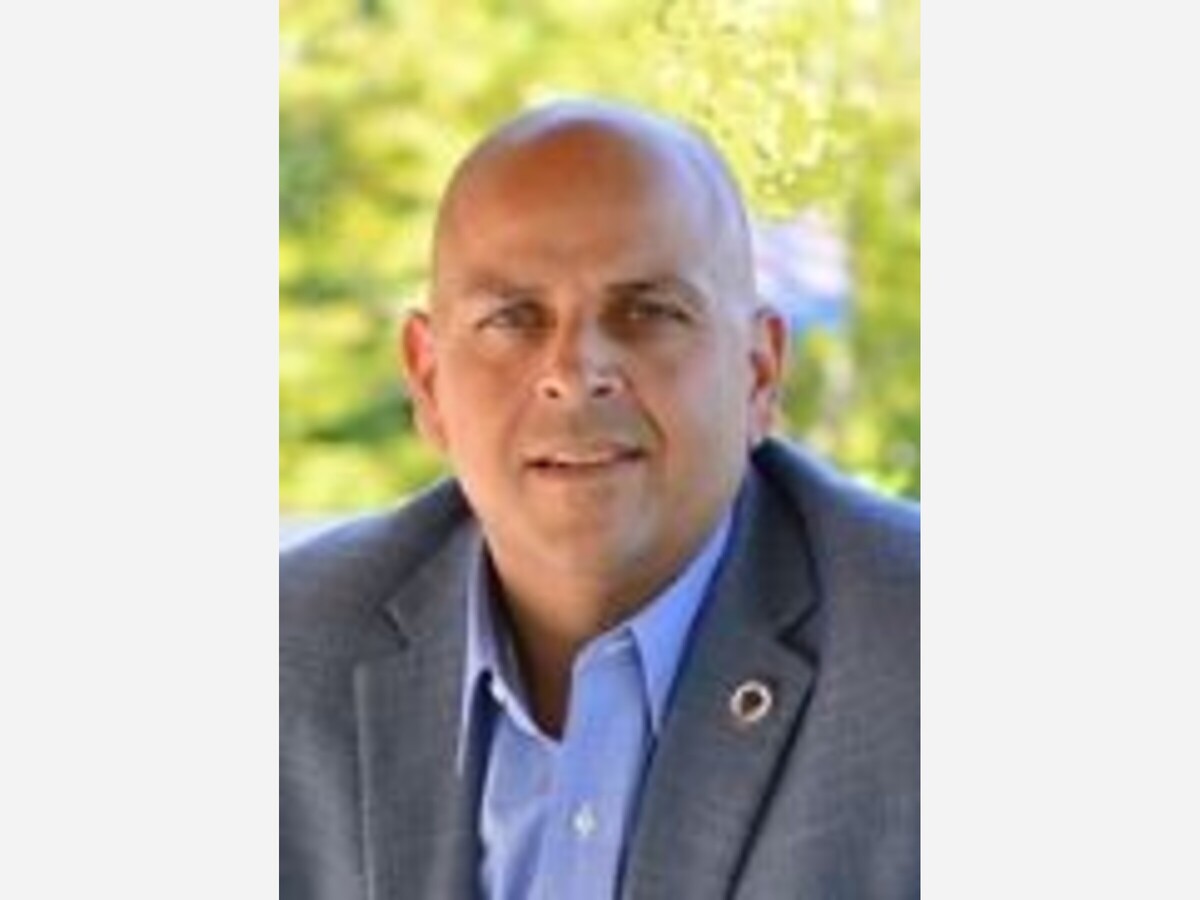
Medway Precinct 1 State Representative Michael J. Soter, R-Bellingham, recently joined with his Republican colleagues to support a package of reform measures promoting utility rate relief and affordability for Massachusetts residents.
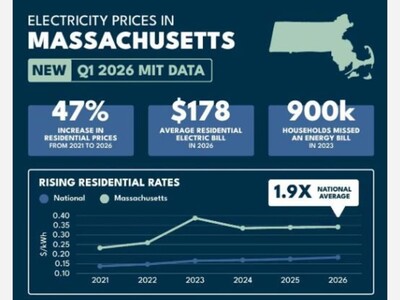
During the February 26 debate on House Bill 5151, An Act relative to energy affordability, clean power and economic competitiveness, members of the House Republican Caucus put forward a series of proposed amendments aimed at providing financial relief for residential and business customers who are struggling with high energy bills. Representative Soter noted that the underlying bill includes some positive provisions but falls short of achieving much-needed affordability goals, particularly in the short term.
In addition to targeting the Mass Save program for reforms, the caucus called for the repeal or delay of costly mandates that are driving up energy costs for ratepayers, while also seeking to place limits on public benefits charges assessed on consumers, offering one-time credits and tax deductions to help ratepayers with their energy bills, and expanding sustainable energy source options, particularly those that are less expensive and more easily accessible than some newer technologies.
With most of the caucus amendments rejected during debate, Representative Soter and his Republican colleagues voted against the underlying bill, which was engrossed on a vote of 128-27, calling it a missed opportunity to secure meaningful relief for ratepayers.
The following is a list of the caucus’ amendments and their final status:
Mass Save Reforms – While House Bill 5151 reduces the budget for Mass Save – an energy efficiency program subsidized by ratepayers on their monthly utility bills – by $1 billion and calls for the Inspector General to conduct a comprehensive review of the program to make sure it is running effectively and efficiently, the caucus has proposed additional reforms to the program, including:
- Prohibiting Mass Save’s administrative costs from exceeding 5% of the amount of funds allocated to the energy savings program (Jones #81 – not adopted);
- Expanding the scope of the IG’s investigation to include a review of the total costs of rebates, contractor payments, installation, and any other program implementation cost (Jones #82 – not adopted); and
- Prohibiting the Department of Public Utilities (DPU) from approving an energy efficiency plan if the total costs are more than 2% greater than the total costs incurred for the previously approved plan, and requiring DPU to adjust public benefit charges as necessary to ensure total collections for Mass Save align with this budget cap while also prohibiting any under-collection from being recovered in a manner that causes total collections to exceed the approved budget cap (McKenna #123 – not adopted).
Emissions and Clean Energy Mandates – Representative Soter noted that the caucus took multiple approaches to address some of the major cost-drivers impacting Massachusetts energy bills by offering proposals to:
- Make the state’s energy efficiency investment plans advisory and non-binding through the year 2030 and prohibiting these plans from adversely impacting ratepayers and Massachusetts businesses (Lombardo #7 – rejected on a roll call of 25-130);
- Direct the Executive Office of Energy and Environmental Affairs (EOEEA) to conduct a competitive solicitation for proposals to increase interstate natural gas transmission capacity into the Commonwealth (Lombardo #8 – rejected on a roll call of 25-129);
- Remove the inclusion of 10 gigawatts each of wind and solar energy by 2040 in the state’s resource solicitation plan (McKenna #38 – rejected on a roll call of 25-129);
- Amend the schedule requiring retail electricity suppliers to provide a minimum percentage of kilowatt-hours sales to end-use customers in the commonwealth from Class I renewable energy generating sources (including solar, wind and hydro), and eliminate the requirement that there be an additional 3% annual increase every year through 2029 (McKenna #46 – rejected on a roll call of 25-130);
- Prevent deforestation by requiring that an incentive-subtractor be applied per acre of previously undisturbed forest in relation to solar array installation projects (McKenna #89 – rejected on a voice vote);
- Direct the Department of Public Utilities to adopt regulations increasing the carrying capacities of existing gas pipelines and distribution mains to meet demand for natural gas service, system reliability and resiliency, stable and affordable rates, and regional energy security (Vaughn #51- not adopted);
- Prohibit any entity within EOEEA from adopting or implementing any rule or policy issued by the California Air Resources Board (CARB) and direct the secretary to identify and rescind or amend any regulation that is drawn from the CARB (McKenna #74 – not adopted);
- Mandate that the enforcement of motor vehicle emissions standards tied to California’s Advanced Clean Car Standards, which require automakers to sell an increasing share of zero-emission vehicles starting in model year 2026, be delayed by 5 years (Jones #78 – rejected on a roll call of 26-129);
- Prohibit state agencies from imposing any regulations, administrative action, or policy implementation related to greenhouse gas emission limits or clean energy unless it has determined that the action shall not affect affordability for ratepayers or competitiveness for Massachusetts businesses (Sweezey #101 – rejected on a roll call of 25-130);
- Create an affordability and competitiveness standard that all state entities in the Commonwealth must adhere to before implementing any regulation, administrative action, program implementation, procurement requirement, or policy undertaken to comply with or contribute to the compliance of statewide greenhouse gas emission limits or to advance the state’s clean energy goals (Sweezey #102 – not adopted);
- Mandate that utility companies will only provide a portion of their supply from renewable sources if such sources are cost effective and do not result in additional costs to end use customers (Frost #109 – rejected on a roll call of 25-130);
- Strike the mandate of all electric vehicle motor vehicle sales by 2035 (Frost #110 – not adopted);
- Remove the provision which required all entities to sell only electric trucks beginning with the next model year (Frost #111 – not adopted); and
- Strike the reference that couples Massachusetts vehicle emission policies to that of California (Frost #112 – not adopted)
Public Benefits Charges – To reduce energy bills for ratepayers, Representative Soter said the caucus offered amendments to:
- Allow public benefit energy charges on energy or gas consumption to be applied only to usage during non-peak hours, from 9 PM to 9 AM. (Sullivan-Almeida #13 – rejected on a roll call of 26-127);
- Grant residential customers the ability to opt-out of the net metering recovery surcharge on utility bills as long as they do not have an interconnected net metering system (Marsi #23 – not adopted);
- Prevent distribution companies from collecting any public benefit charge from low-income residential customers (Vaughn #53 – not adopted);
- Prohibit public benefit charges from being assessed or collected on bills for gas service (Chaisson #71 – not adopted); and
- Impose a 12 consecutive billing months moratorium, during which time electric distribution companies will be prohibited from charging or collecting the public benefit energy charge from retail electric customers, while preventing DPU from deferring, tracking, or allowing any future recovery of the forgone public benefit charge revenue through rate increases, surcharges, reconciliation mechanisms, interest, or any other adjustments. (Sweezey #105 – rejected on a roll call of 25-130)
One Time Credits and Tax Deductions – To provide more immediate financial relief to ratepayers, the caucus offered amendments to:
- Require DPU to issue a one-time credit of $250 to residential ratepayers with a total annual income of $75,000 for individuals or $150,000 for those filing jointly for electric, gas, propane gas, or oil utilities, which will be reflected on their monthly statement at the time of the credit, with automatic eligibility for those participating in qualified means-tested programs like SSI, SNAP, WIC, and MassHealth. The credit would be paid from the Mass Save program, and would prohibit DPU from authorizing the recovery of foregone revenue (Soter #42 – not adopted);
- Require DPU to issue a one-time credit of $500 to commercial rate payers for electric, gas, propane gas, or oil utilities, which will be reflected on their monthly statement at the time of the credit, with the credit limited to commercial ratepayers who have 20 or less employees or a gross annual revenue of $1 million or less; (Soter #43 – not adopted) and
- Establish a tax deduction in an amount equal to what has been paid in electric, gas, propane gas, and oil utilities of up to $10,000, which would be available to individuals who make up to $175,000 and joint filers who make up to $350,000 and would remain in effect until December 31, 2029 (Soter #44 – not adopted)
Additional Reforms – Representative Soter supported additional reform measures offered by the caucus, including proposals to:
- Cap a utility company’s Gas System Enhancement Plan (GSEP) at 1.5% of their most recent yearly firm revenues, including gas revenues attributable to sales and transportation customers (Jones #95 – not adopted);
- Prohibit the state from approving a battery storage facility unless the local body has approved the project and given the municipality the authority to establish additional siting, safety, and environmental requirements for battery energy storage facilities, with a requirement that state authorities provide technical assistance to municipalities in evaluating proposed projects (Pease #21 – rejected on a roll call of 26-127);
- Establish a mandatory safety buffer zone and fire safety standards to prevent groundwater and soil contamination for battery storage facilities, which would be prohibited within 2,000 feet of populated areas (residential zones, schools, hospitals, etc.) and within 3,000 feet of ecologically protected areas like wetlands, wildlife reserves, and conservation lands (Pease #22 – rejected on a voice vote);
- Allow customers to use another propane company to fill their tank if the company they are contracted with cannot fill their tank, while also providing legal protections to the customer (Marsi #24 – rejected on a roll call of 25-128);
- Establish a revolving fund – to be administered by EOEEA in coordination with the Executive Office of Economic Development – to provide financial assistance to entities carrying out a project for the development or manufacturing of energy technologies to incentivize investment in such facilities and equipment, which would be available to entities that commit to maintaining their principal research, manufacturing, or commercial deployment operations within the Commonwealth for 15 years, with the funding subject to clawback by the state if the required conditions are not met (Soter #45 – not adopted);
- Allow a municipal light plant (MLP) that is providing emergency mutual aid to sell, rent, or lease infrastructure related to the provision of emergency mutual aid, and ensure that any employee of an MLP providing emergency mutual aid shall be covered as though performing these duties within the scope of their employment (Jones #76 – adopted as part of Consolidated Amendment B on a roll call of 138-16);
- Allow MLPs to provide services – including the construction, installation, operation, or maintenance of utility poles and conduit, wires, cables, and equipment, and streetlights and traffic signals – to assist utilities, including their own municipal light plant (Jones #77 – adopted as part of Consolidated Amendment B on a roll call of 138-16); and
- Require the electric rates task force to include legislative and regulatory reform recommendations to provide both short-term and long-term rate relief for residential and commercial consumers, along with a comparison of ratepayer affordability in Massachusetts with similarly situated states, including policy, infrastructure and market cost drivers (Jones #79 – adopted as part of Consolidated Amendment C on a roll call of 128-26).
House Bill 5151 will now move to the Senate for its consideration.

 55° and Fog