59° and Heavy rain



Image
Sepsis is a serious and fast-moving medical condition that can lead to death if not treated quickly. According to the Centers for Disease Control and Prevention (CDC), more than 1.7 million adults in the U.S. develop sepsis each year, and over 350,000 of them die during hospitalization or shortly after leaving the hospital.
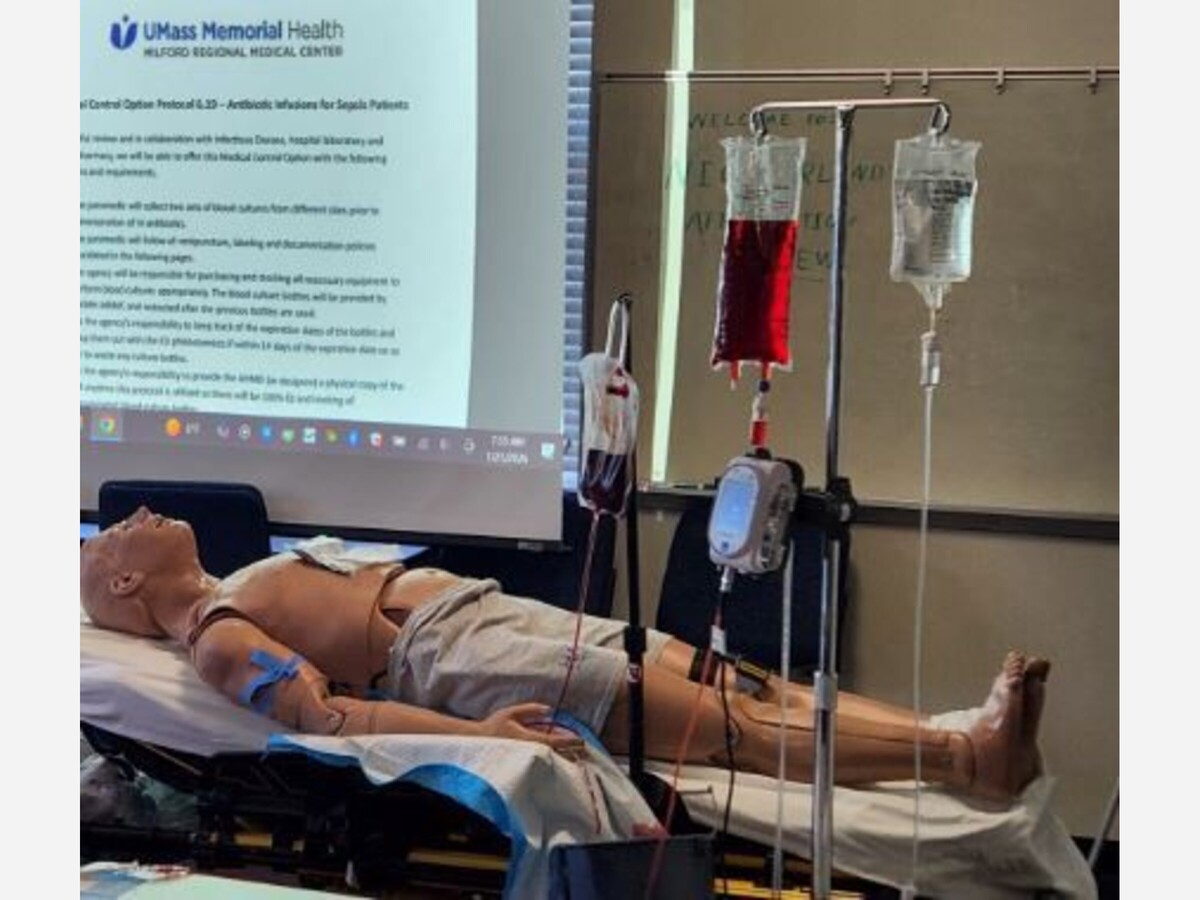
Recognizing how important early treatment is, the Franklin Fire Department has teamed up with UMass Memorial–Milford Regional Hospital to launch a new program that allows paramedics to start antibiotics in the field before patients reach the emergency department. The program is approved by the Massachusetts Department of Public Health, Office of Emergency Medical Services.
Because all Franklin firefighters are certified paramedics, every responding Franklin ambulance crew is capable of providing this advanced care.
Planning began in the summer of 2025 under the guidance of the department’s affiliate medical director at Milford Regional Hospital.Firefighter/Paramedics were trained to identify patients showing signs of sepsis, such as fever, low blood pressure, rapid breathing, or confusion, and begin treatment right away.
When paramedics suspect sepsis, they draw blood samples, start IV lines, and consult directly with an emergency department physician. If appropriate, they administer Cefepime, a broad-spectrum antibiotic, through an IV infusion pump over about 30 minutes. The new antibiotic kits officially went into service on February 2, 2026. Every sepsis call is carefully reviewed by Franklin Fire’s EMS officers and the hospital’s medical director to ensure high-quality patient care.
“By starting treatment as soon as possible, our paramedics are buying time that can make a real difference,” said Fire Chief Charles Allen. “This program reflects our department’s commitment to expanding advanced medical care in the community. We are proud to bring this level of service to the people of Franklin.”
According to Deputy Chief Joseph Barbieri III, other fire departments are either currently offering field sepsis treatment or are evaluating the program for possible implementation.


Overcast, with a high of 66 and low of 47 degrees. Overcast during the morning, patchy rain nearby for the afternoon, light rain shower in the evening, overcast overnight.



![Could Tesla Help Reduce the Region's Power Outage Challenges? [Updated]](https://franklinobserver.town.news/sites/default/files/styles/manual_crop_400/public/9677/2026-10/tesla_model_y.png?itok=Lu3Tmdge)