55° and Fog



Image
Sam Drysdale |SHNS
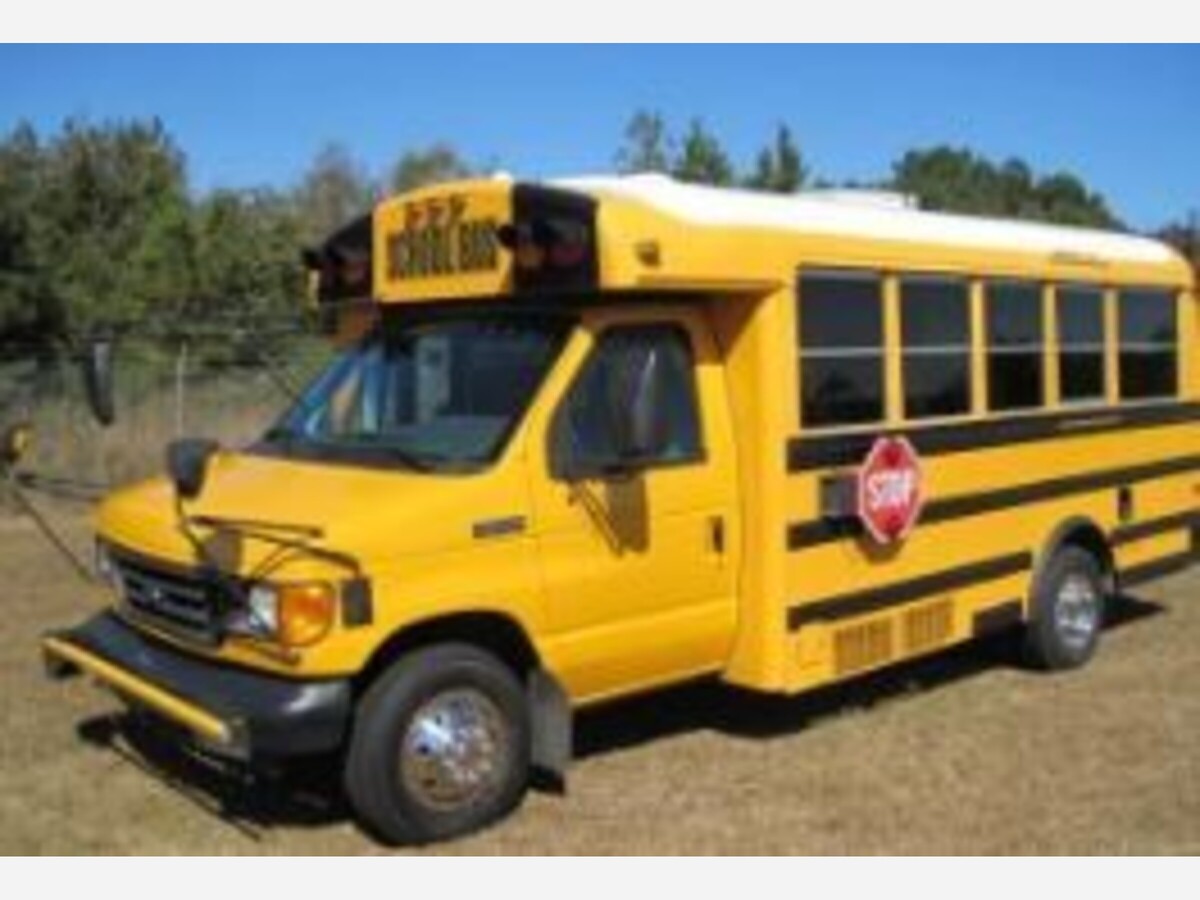
Massachusetts' unusual reimbursement model for special education transportation is straining local school budgets and driving inequities, according to a new report from the inspector general.
As transportation expenses continue to climb, lawmakers last year tasked Inspector General Jeffrey Shapiro with studying procurement practices, cost drivers and opportunities for regionalization.
Beyond the reimbursement model, the inspector general's report, which was released Tuesday, also flagged other factors that could negatively influence the buying power of limited public appropriations.
"Vendors are not required to provide school districts with detailed invoices, making it impossible for districts to understand what they are paying for," the office said in a summary of findings. The report also found that "there is no central repository for school transportation bids and contracts," limiting districts' ability to compare prices and procurement strategies.
The report focuses on a reimbursement structure known as "circuit breaker" funding. Massachusetts is "one of only six states in which nearly all state funding for special education pupil transportation is delivered through reimbursement," the study states. Under that system, districts must pay the full cost of special education transportation up front and are then reimbursed a percentage by the state in the following fiscal year.
"The OIG believes this reimbursement model is burdensome for school districts, as they must front load and carry such costs until the state later provides some reimbursement based upon a formula and the state's capacity to fund," the study found. "By changing the timing for carrying these costs, the OIG finds that school districts could otherwise use these funds for other critical uses."
The report suggests policymakers consider shifting away from the delayed reimbursement structure toward a more formula-driven or same-year funding approach that would reduce administrative complexity and ease district cash-flow pressures.
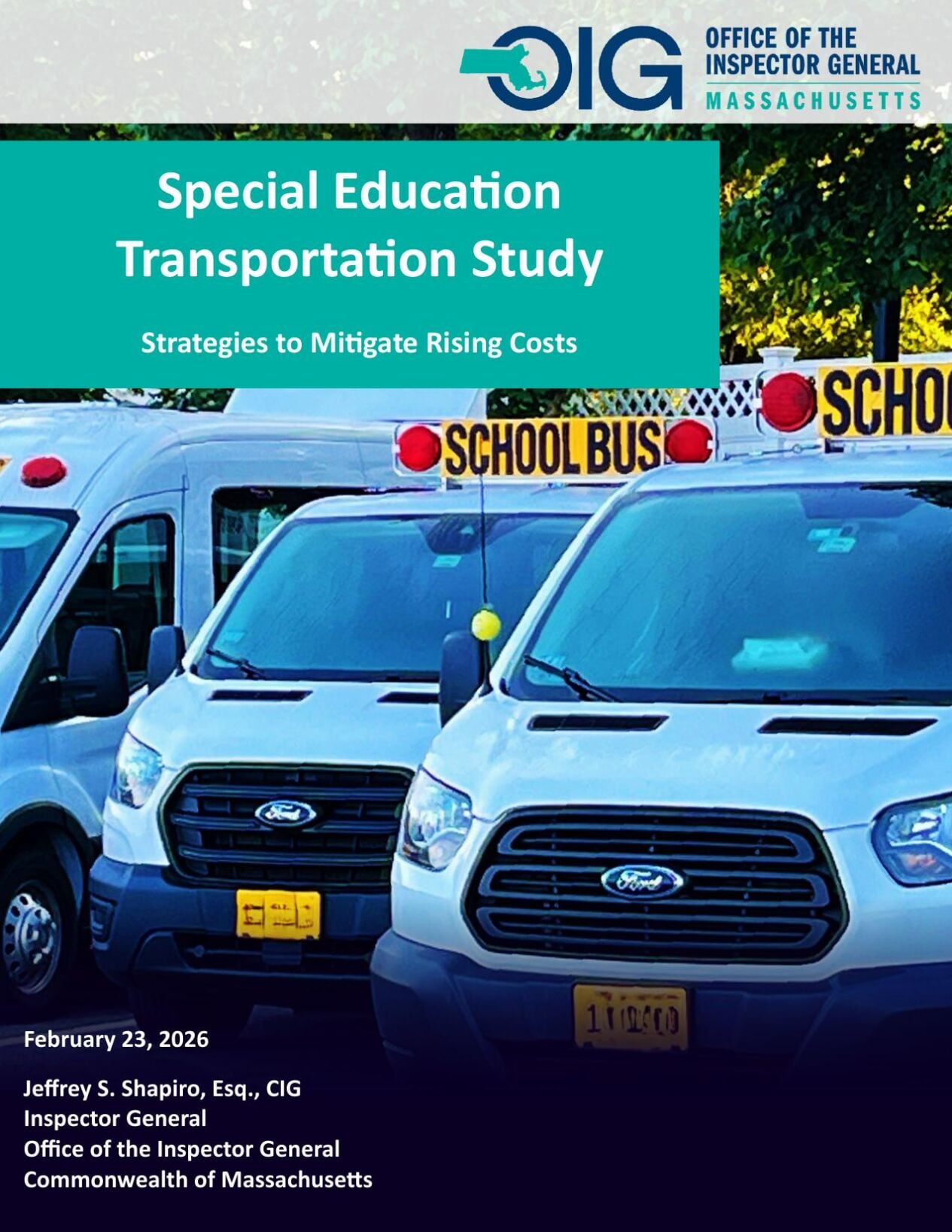
Special education transportation represents a sizable and growing expense for local districts and the state. In fiscal 2024, districts transported 61,996 students to special education programs at an average cost of $13,825 per student, compared to $1,045 per student for general education transportation.
The median annual cost per rider for out-of-district special education placements increased 11% from fiscal 2022 to fiscal 2023 and 8% the following year, outpacing inflation in both periods.
Although the program is designed to reimburse 75% of eligible costs above a per-student threshold when fully funded, reimbursement levels depend on legislative appropriations. In fiscal 2025, tuition and instruction for special education students was reimbursed at the full rate, but transportation reimbursement dropped to 61.36%.
Gov. Maura Healey filed a supplemental budget (H 5033) in January to fully fund the circuit breaker at 75%. The House Ways and Means Committee is reviewing her proposal.
The current state budget includes $484.9 million for the Special Education Circuit Breaker, which covers transportation as well as tuition and other special service payments, in addition to $190 million provided in the a supplemental budget using surtax funds. The combined total fulfills the state’s commitment to reimburse 75% of eligible tuition and transportation costs.
The report lays out a series of recommendations aimed at lawmakers, the Department of Elementary and Secondary Education, and local districts. Among them: modifying the circuit breaker model to ease the cash-flow burden on districts; requiring transportation vendors to provide detailed pricing breakdowns during procurement, contract negotiations and billing; and directing DESE to create a centralized database of transportation bids, contracts and licensed providers to promote transparency and more competitive pricing.
Massachusetts law restricts the types of vehicles that can be used for special education transportation, and Shapiro recommends reviewing and updating these regulations to allow greater flexibility and efficiency in service delivery.
The inspector general also recommended supporting voluntary regional collaborations where geography and demand make shared services feasible, while cautioning that regionalization "has potential value in some areas of the state but it would not meet the needs of every district." The study notes regional and geographically large districts in particular — which often face higher transportation costs per student — could have limited savings from shared services, due to long travel distances, limited vendor pools and complex routing demands.
The issue is not new.
"School transportation costs have been studied at least four times in the last 20 years," the study said, adding that "there has been limited follow-through with these recommendations."
Shapiro urged policymakers to act this time.
"I am hopeful that this study will help pave a path toward meaningful action on this issue," Shapiro added. "I respectfully urge the Legislature, DESE, and local school districts to work together and not let this be one more study to simply grace a shelf in the State Archives."
Sam Drysdale is a reporter for State House News Service and State Affairs Pro Massachusetts.

Patchy rain nearby, with a high of 70 and low of 53 degrees. Don't forget your umbrella! Fog during the morning, overcast for the afternoon, clear for the evening, fog overnight.