65° and Sunny



Image
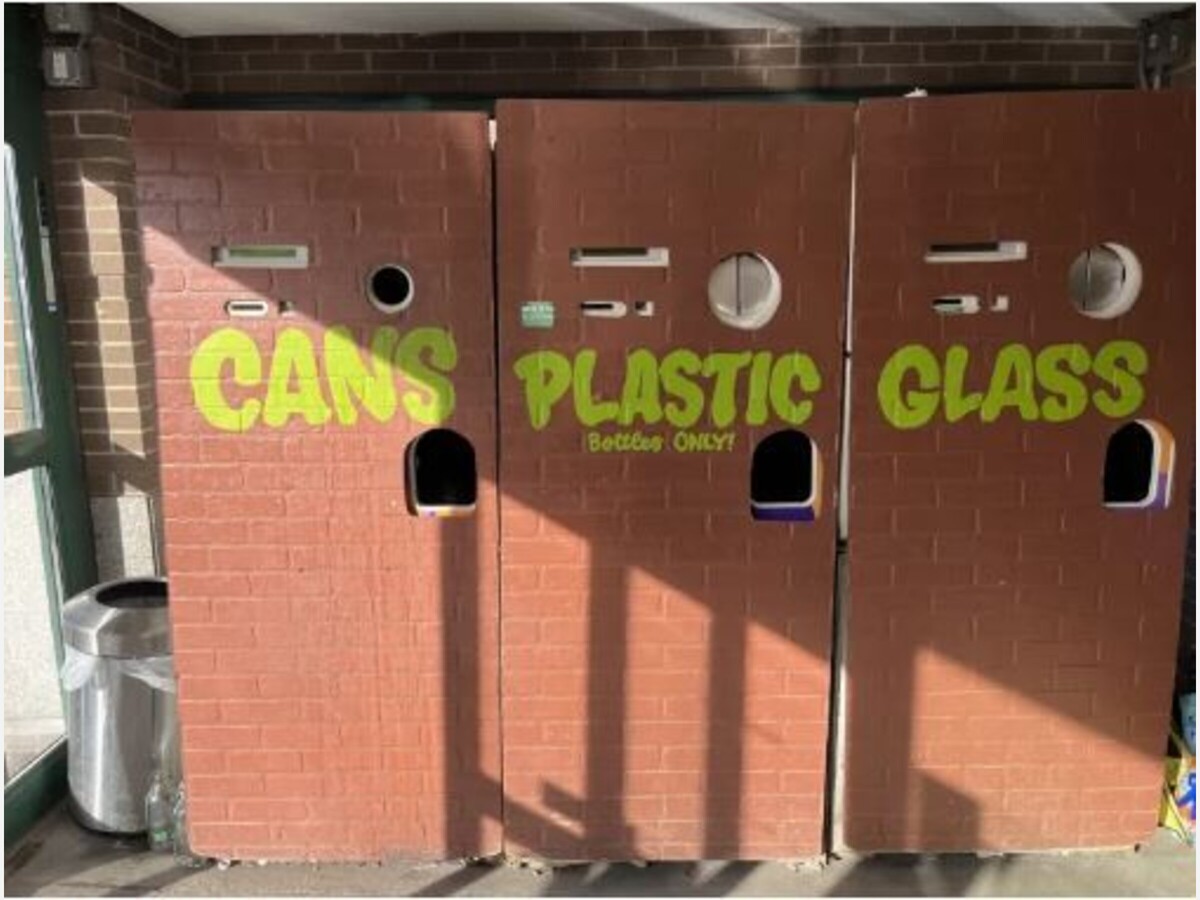
Beverage containers are being returned to redemption centers like this one in Brookline at the worst rate in the country out of all 10 bottle bill states. (Jordan Wolman/CommonWealth Beacon)
by Jordan Wolman, CommonWealth Beacon
March 25, 2026
A STAPLE FEEL-GOOD win that served as a hallmark of Massachusetts’s commitment to environmental causes has suffered from a decades-long slow but decisive downward spiral.
The state’s bottle deposit program, which has handed out a nickel for each eligible bottle and can that consumers redeem since it started in 1983, has been hailed as a game-changer in reducing litter and incentivizing recycling.
But the program’s success has deteriorated steadily over time.
In fiscal year 1995, 87 percent of eligible bottles and cans bought in the Bay State were redeemed. Ten years later, the redemption rate dropped to two-thirds. Last fiscal year, just one-third of the bottles and cans sold in Massachusetts that could be returned were brought back for redemption, according to data from the state Department of Environmental Protection.
Out of the 10 states that have a “bottle bill,” including neighboring New York, Vermont, and Connecticut, Massachusetts has the lowest redemption rate.
“It’s a distinction with dishonor,” said Janet Domenitz, executive director of MASSPIRG, a public interest group and longtime proponent of the program. “And it’s so obvious how we could improve instantly.”
For advocates, it’s a clear sign of the obvious: A nickel just isn’t what it used to be more than 40 years ago, leading more people to forego the chore of redeeming containers. They are making a push for legislative reforms that would double the refund rate from 5 to 10 cents and expand the list of bottles and cans that can be redeemed.
Past efforts have stalled — clearing the Senate as recently as 2024, only to peter out in the House — but this time, advocates are taking a new tack: targeting Polar Beverages, the popular Worcester-based company that opposes bottle bill expansion.
Just Zero, a national nonprofit environmental advocacy group based in Sturbridge, contends that Polar has wielded particular influence in the Legislature to kill past efforts to expand to the bottle bill.
“We're trying to force a divorce between Polar Beverages and the Legislature,” said Kirstie Pecci, the group’s executive director. “They have an outsized voice.”
Just Zero is launching a lobbying blitz targeting lawmakers on Beacon Hill and organizing a pressure campaign against Polar. Pecci maintains that the proposed reforms would only minimally impact the company’s bottom line in Massachusetts.
Chris Crowley, Polar’s executive vice president, doesn’t dispute that the company has no interest in seeing the bottle bill expanded in Massachusetts. Perceptions of undue influence, however, are flat wrong, he said, though he conceded that the company enjoyed a close relationship with former House speaker Robert DeLeo.
“The all-powerful Oz,” Crowley said in jest of the way Polar’s clout is being characterized. “I wish we had that kind of power.”
In Massachusetts, consumers pay a 5-cent deposit for glass, plastic, aluminum, and metal containers of beer, carbonated soft beverages, and mineral waters. They can then bring those eligible containers to redemption centers — oftentimes, grocery stores and other similar establishments — for a 5-cent refund per can. Those containers are then returned to the beverage company and recycled. States with bottle bills generally boast substantially higher recycling rates than those without.
The system flips the way trash and recycling costs are typically financed in the US by shifting more of the burden onto beverage companies. Under the bottle bill, the producer pays a handling fee of either 2.25 cents or 3.25 cents per container to the redemption center, reducing the burden on municipalities that often pay for recycling on a per-ton basis.
Bottle bill reforms would not only lead to a spike in the redemption rate and an 85 percent litter reduction of containers with deposits, according to a 2022 report, but they would also save Massachusetts cities and towns at least $26 million per year.
The Massachusetts Municipal Association is supporting the bottle bill expansion for exactly that reason. Adam Chapdelaine, the head of the organization, wrote to lawmakers last year that “the era where recycling was profitable to cities and towns has unfortunately come and gone.” There has been an 18 percent increase in municipal solid waste disposal and recycling processing costs between 2021 and 2024, according to the state Department of Environmental Protection.
Still, the growth of curbside recycling, broader affordability concerns, and decline of the bottle deposit system itself is arguably making it harder for the reforms to gain momentum.
Beverage manufacturers and the waste collection industry argue that doubling down on a program in tatters — and charging consumers 5 cents more up front — is illogical, while supporters of the program contend that the system’s decline is all the more reason for a makeover after remaining largely unchanged for 40-plus years.
The opposition from business groups has made enacting the reforms, many of which have been on the table for more than a decade, an uphill battle. Crowley, for one, called the bottle bill an “incredibly inefficient way to recycle” compared to curbside programs and something that is expensive for companies like Polar to operate.
The waste industry is also fighting expansion. Lewis Dubuque, vice president of chapter management for the Northeast states at the National Waste and Recycling Association, disputed that an expanded bottle bill could save municipalities money because beverage containers often represent some of the most valuable materials in the recycling stream that haulers then sell.
“You are going to increase the price of recycling for municipalities. That’s just a fact,” he said. “The price of the bottle is also going to go up at the store by 5 cents. It basically is acting as a regressive grocery tax.”
A glaring hole in the program’s ability to drive redemption is the lack of accessibility for consumers to return their containers. Only one-quarter of the retailers required to accept back bottles and cans are doing so in the Bay State, according to a 2022 report from the Container Recycling Institute, pointing to a significant enforcement lapse.
One reason for the legislative reluctance to embrace expansion is a 2014 ballot measure that saw voters decisively reject a bottle bill expansion by a roughly 73-27 margin.
“That's a pretty clear mandate to us,” said Stephen Boksanski, executive director of the Massachusetts Beverage Association. “You just don't see those types of numbers if there's not a good reason behind it.”
That failed ballot initiative, which would have doubled the refund rate, increased the handling fee, and expanded the system to essentially include all beverage containers, still looms large over the expansion efforts underway today.
The measure attracted the opposition of big players — and their dollars to back it up.
The American Beverage Association, the national organization affiliated with Boksanski’s group that represents brands like Dr. Pepper and Dasani, bankrolled the bulk of the opposition campaign that poured in a total of roughly $9.5 million to defeat the measure. (Ralph Crowley, Jr., Polar’s president and CEO, serves as treasurer of the American Beverage Association’s board of directors.)
Other large companies like Coca-Cola, Stop & Shop, and Nestle also pitched in, according to records from the state Office of Campaign and Political Finance.
“We're agnostic to some degree as to how people recycle,” Boksanski said. “We want those bottles back. If that means going to your transfer station, if that means putting it at your curb, if that means going to your redemption center, we want people to do all of the above. But why would we invest more money in a system that's not going to get us where we want to go?” he said of expanding the deposit program. “It’s an expensive system to run, and when you're not getting the returns, it's disappointing and frustrating.”
Campaign ads opposing the 2014 ballot question ripped it for promoting "forced deposits" and argued that "yesterday's solutions will not meet today's challenges." The lopsided defeat of the question came despite support for expanding the bottle bill from lots of leading officials, including then-Gov. Deval Patrick.
Advocates don’t sugarcoat the 2014 outcome, but are still bitter about the role that heavy corporate spending played.
“It was a lashing,” said Domenitz, the MASSPIRG leader. “But we got outspent by $10 million. They did an excellent job of befuddling everybody.”
In addition to raising the deposit to 10 cents and expanding eligibility to most beverage containers, a bill now pending at the State House would require a regular review of the handling fee and set targets so that 95 percent of bottles and cans are redeemed by 2033.
The irony of the steadily declining redemption rate is that it has infused state coffers with tens of millions of dollars in unredeemed deposit money. That money is now left in the General Fund, but the proposed legislation would direct some of it toward a dedicated environmental fund.
“The federal government doesn't seem to have the same commitment to the environment that we have,” said Sen. Cynthia Creem, who is leading the bottle bill expansion effort in the Legislature. “So if we don't have all the funding coming in, this is a very small thing that we can do to keep our greenhouse gas emissions down,” since increased recycling displaces the need to produce new materials.
Other states with bottle deposit programs have enacted similar reforms in recent years. In 2021, Connecticut raised the deposit level from 5 cents to 10, increased the handling fee paid by beverage companies, and included more containers as eligible. The redemption rate there jumped from 44 percent in 2020 to nearly 65 percent in 2024. California also added deposits on more types of beverage containers in 2024.
Yet all the jockeying now underway after years of attempted fixes to the country’s worst-performing bottle bill may be more of a dress rehearsal for what will likely be another round in this battle next year. Beacon Hill will be loath to tack on anything resembling a new consumer charge with an election looming, so the battle seems likely to spill over to the new legislative session that begins next January, when advocates are bound to mount another push.
This article first appeared on CommonWealth Beacon and is republished here under a Creative Commons Attribution-NoDerivatives 4.0 International License.

PARSELY = { autotrack: false, onload: function() { PARSELY.beacon.trackPageView({ url: "https://commonwealthbeacon.org/environment/mass-bottle-deposit-system-c…", urlref: window.location.href }); } }



Partly Cloudy, with a high of 60 and low of 42 degrees. Overcast for the morning, sunny during the afternoon, clear overnight.