82° and Overcast



Image
If you have any questions about this week's report, e-mail us at bob@beaconhillrollcall.com or call us at (617) 720-1562.
Beacon Hill Roll Call
Volume 51 - Report No. 24
June 8-12, 2026
Copyright © 2026 Beacon Hill Roll Call. All Rights Reserved.
By Bob Katzen
GET A FREE SUBSCRIPTION TO MASSTERLIST – Join more than 30,000 people, from movers and shakers to political junkies and interested citizens, who start their weekday and Saturday mornings with MASSterList—the popular newsletter that chronicles news and informed analysis about what’s going on up on Beacon Hill, in Massachusetts politics, policy, media and influence. The stories are drawn from major news organizations as well as specialized publications.
MASSterList will be e-mailed to you FREE every Monday through Saturday morning and will give you a leg up on what’s happening in the blood sport of Bay State politics. For more information and to get your free subscription, go to: www.massterlist.com
THE HOUSE AND SENATE: Beacon Hill Roll Call reports local representatives' and senators' votes on roll calls from the week of June 8-12.
BANNING SCHOOL AND PUBLIC LIBRARY BOOKS AND MATERIALS (H 5489)
House 153-3, approved a bill that supporters said would protect people’s access to library materials and guard against politically motivated book bans in Bay State school libraries and public libraries. The bill requires local policies to be developed using nationally recognized library standards and lays out a process around challenges to library materials. The bill also protects librarians and school library professionals from retaliation.
The Senate has already approved a different version of the measure and the House version now goes to the Senate for consideration.
Provisions in the House bill include giving students the right to receive information, including school library materials deemed educational and age appropriate; requiring that determinations about whether materials are age appropriate are made by qualified school library professionals using their professional training and expertise, and not based on personal, political or doctrinal beliefs; requiring school districts to adopt a written policy governing the selection and use of school library materials and facilities.
The House measure also requires public libraries to adopt and publicly post written policies governing the selection and use of library materials and facilities as well as mandating that the policies must incorporate the American Library Association’s Bill of Rights and ensure that materials are not selected, restricted or removed based on personal, political or doctrinal viewpoint.
“I am proud that the House passed my bill to prevent censorship and protect freedom of speech,” said sponsor Rep. Adam Scanlon (D-North Attleborough). “This is about defending something basic: the right of students and communities to be able to learn freely, encounter a broad spectrum of ideas and choose what they read without interference.”
“I learned from leaders who served in my seat before me – including the great Mel King - that there are moments when we must stand up for civil rights,” said another sponsor Rep. John Moran (D-Boston). “Today I stand with our librarians, our students and our commitment to intellectual freedom. At a time when the loudest voices too often dominate, libraries remain quiet spaces where curiosity is encouraged, knowledge is accessible and free expression is protected. Let us ensure they remain that way across the commonwealth.”
“Every person and student within the commonwealth deserves access to a strong and diverse selection of books professionally curated and set by national standards, not dictated by ideology or politics,” said Rep. Sean Garballey (D-Arlington), House Chair of the Committee on Tourism, Arts and Cultural Development. “By ensuring librarians are protected when performing their duties, and that our schools and public libraries have the support systems to comply with state law and national collection standards, we in Massachusetts are at the forefront of fighting against a new wave of censorship.”
Only three representatives voted against the bill – Reps. John Gaskey (R-Carver), David DeCoste (R-Norwell); and Donald Berthiaume (R-Spencer). None of them responded to repeated requests from Beacon Hill Roll Call asking them why they opposed the bill.
(A “Yes” vote is for the bill. A “No” vote is against it.)
Rep. Jeffrey Roy Yes
ELIMINATE LAW THAT PROTECTS EMPLOYEES FROM PROSECUTION (H 5489)
House 2-154, rejected an amendment striking a current law which prevents employees of schools, libraires and museums from being prosecuted for violating obscenity laws if the evidence proves that the defendant was acting in the course of his or her employment as an employee of those entities.
Rep. John Gaskey (R-Carver), the sponsor of the amendment, said current law unfairly grants absolute unchecked legal immunity to government employees, rendering them completely unaccountable to taxpayers who fund them. He said the House is establishing an elite class of citizens in Massachusetts and saying to the working class taxpayers who fund schools that if they distribute explicit adult material to a minor, they will go to state prison; but if a state-certified bureaucrat does it under the vague banner of an educational purpose, they get statutory immunity and can't be fined, fired or prosecuted.
Rep. Adam Scanlon (D-North Attleborough), who voted against the amendment, said that this existing protection is a good one that shields schools, libraries and museums from obscenity enforcement when materials have legitimate educational, literary, artistic or scientific value. He argued that the underlying bill already establishes clear, meaningful standards for what materials may be included in school libraries, and that removing the existing protection would expose educators and librarians to criminal obscenity proceedings simply for doing their jobs.
(A “Yes” vote is for the amendment which strikes the protection and therefore opposes the protection. A “No” vote is against the amendment and therfore supports the protection.)
Rep. Jeffrey Roy No
SAFETY FOR FIREFIGHTERS (H 5488)
House 156-0, approved and sent to the Senate legislation that would create a public database of violations of the state’s fire prevention laws and a public notification system to alert workers of violations.
The measure is designed to boost safety for firefighters and people conducting “hot work” including welding, plasma cutting and spark-producing construction. The proposed law has been ten years in the making and was first prompted by the March 2014 deaths of firefighters Edward Walsh and Michael Kennedy who perished while fighting a fire that was caused by welders, working without a city permit, on a building next door to the brownstone in which they died.
“By making these crucial reforms we will ensure the safety of the general public and our first responders,” said Rep. Aaron Michlewitz (D-Boston), Chair of the House Committee on Ways and Means.
"While we can never undo the profound loss of Lt. Edward Walsh and Firefighter Michael Kennedy, we can honor their sacrifice by ensuring that the lessons learned from that tragic day are not forgotten," said Rep. Daniel Cahill (D-Lynn), House Chair of the Committee on Public Safety and Homeland Security.
The Senate approved a similar bill in March 2024 but it died in the House Ways and Means Committee which did not act on it.
(A “Yes” vote is for the bill.)
Rep. Jeffrey Roy Yes
NO-COST CALLS FOR PRISONERS (H 5493)
House 28-128, rejected an amendment to a section of a $228 million fiscal year 2026 supplemental budget that provides $22.5 million to cover the additional costs associated with no cost calls for Massachusetts prisoners. The amendment would delay the distribution of this funding until the Secretary of Administration and Finance develops and presents a plan to keep the annual expenditure from this line item under $10 million.
“While Massachusetts prisoners are able to make unlimited phone calls free of charge, there is still a significant cost associated with this program for the sheriffs’ offices and the commonwealth,” said amendment sponsor Rep. Brad Jones (R-North Reading). “Multiple sheriffs’ offices have testified that these costs are out of control and need to be reined in. This amendment would take steps to address this problem by making sure a plan is in place to cap expenses at no more than $10 million per year, which is still a significant number but is well below what the state is currently spending on the program.”
Opponents said that the No-Cost Calls Law works because when prisoners are able to communicate with their families and friends, the result is better success rates and less recidivism. They argued that this $22.5 million is wisely spent on this program and means the state would be able to spend less money on its criminal justice system.
(A "Yes" vote is for reducing the funding to $10 million. A “No” vote is against the $10 million reduction and favors the $22.5 million.)
Rep. Jeffrey Roy No
CHILD WELFARE (S 3111)
Senate 39-0, approved and sent to the House a bill that supporters say would guarantee certain basic rights for children in foster care related to their safety, education and health care. They argued that the measure safeguards the wellbeing of children, especially those in state care and foster care; increases access to community support for children at risk of court involvement; and strengthens the Office of the Child Advocate to support robust investigations into reports of harm or abuse to a child.
A key provision would expand the diversion of children dealing with behavior or attendance problems to Family Resource Centers (FRCs) instead of the court system. Supporters note that FRCs provide accessible, confidential support to children and families in crisis close to home and have proven successful in helping kids and teens stay in school, connecting families with services such as mental health or substance use treatment, housing aid and legal help.
“The bill brought before the Senate today makes important changes to improve the efficiency, transparency, accountability and performance of the Department of Children and Families, the Office of the Child Advocate and the Children Requiring Assistance systems,” said Sen. Robyn Kennedy (D-Worcester), Senate Chair of the Committee on Children, Families and Persons with Disabilities. “These long-needed improvements to our child welfare ecosystem have passed today because of the tireless work of so many. Because of their efforts, Massachusetts will be a better place for our children to learn and grow. Just as it takes a village to raise a child, it also takes a village to make policy that helps all the children of the commonwealth thrive.”
“The Senate is standing firm in its commitment to improve safety, stability and well-being for children across the commonwealth, with special attention to protecting children in foster care,” said Sen. Jo Comerford (D-Northampton), a key proponent of the measure. “This legislation includes a Foster Child Bill of Rights, which clarifies and affirms that every child deserves to be heard, supported and treated with dignity. It recognizes the importance of supportive and affirming placements, preserving family and kinship connections whenever possible, maintaining educational continuity, honoring cultural and gender identities and ensuring children with disabilities receive the accommodations they need.”
(A “Yes” vote is for the bill.)
Sen. Rebecca Rausch Yes Sen. Karen Spilka President rarely votes
ALSO UP ON BEACON HILL
2026 SALES TAX HOLIDAY (S 3119 and H 5495) – The House and Senate, on a voice vote without a roll call, approved a measure that would allow consumers to buy most products that cost under $2,500 on Saturday, August 8 and Sunday, August 9 without paying the state's 6.25 percent sales tax. A 2018 state law, which made the sales tax holiday permanent, requires the Legislature to vote to set the dates of the holiday each year. The measure does not need the governor’s signature to become effective.
Supporters of the bill said the holiday, which has been in effect for many years, would boost retail sales and noted that consumers would save millions of dollars. They argued that the state's sales tax revenue loss would be offset by increased revenue from the meals and gas tax revenue generated by shoppers on those two days. They noted that according to the Department of Revenue, the 2025 sales tax holiday generated $3.65 million in indirect tax revenues due to increased economic activity.
“At a time when many families and small businesses are facing real financial pressures, our tax-free weekend provides meaningful relief for consumers while supporting the local retailers that are so important to our communities,” said Sen. Nick Collins (D-South Boston), the Senate sponsor of the measure. “I am proud to sponsor the legislation establishing the 2026 tax-free weekend and look forward to another successful year of helping residents save money while driving business to Main Streets across the commonwealth.”
Some opponents of the measure said the state cannot afford the up to $30 million estimated revenue loss and argued that the holiday actually generates little additional revenue for stores because consumers typically buy the products even without the tax-free days. Others said that the Legislature should be looking at broader, deeper tax relief for individuals and businesses and not a tiny tax-free holiday. Some said that legislators should not vote for this tax holiday when they have not yet restored all the local aid, education and other important program cuts made over the past few years.
$4.58 BILLION FOR TRANSPORTATION PROJECTS INCLUDING $300 MILLION FOR LOCAL ROADS AND BRIDGES (H 5375) – Gov. Maura Healey signed into law a measure that authorizes $4.58 billion in bonding for various local, regional and state transportation programs. The package includes $300 million for cities and towns for local roads and bridges -- $200 million which will be distributed to all municipalities based on the standard Chapter 90 Program distribution formula and another $100 million which will be distributed based solely on road mileage.
Other provisions include $500 million for the Lifecycle Asset Management Program which aids non-federally funded roads and targets the pavement and bridges across the state that are in the worst condition; $200 million for capital projects to support housing development, including stormwater management, culverts and bike and pedestrian improvements; $200 million for a new accelerated deferred maintenance and modernization program for infrastructure under the care and control of the Department of Conservation and Recreation; and $200 million for the MBTA for the procurement of electrically powered locomotives.
The legislation also reauthorizes $3.18 billion in funding for several programs included in the 2022 Transportation Bond Bill including $2.3 billion for projects on interstates and other federally aided highways; $800 million for improvements to non-federally aided roadways and bridges; $65 million for the Municipal Pavement Program for engineering, permitting, design and climate change adaptation on municipal ways; and $12 million for grants for the Shared Streets Program for improvements to municipal streets to create additional capacity for pedestrians and cyclists.
“Every community deserves safe, reliable roads, bridges and transportation infrastructure,” said Gov. Healey. “This bill delivers the resources that cities and towns need to make critical improvements, improve public safety and support housing growth. We're proud to partner with local leaders across Massachusetts to make our communities more connected, more affordable and better positioned for the future.”
“Chapter 90 funding gives communities the flexibility to address the transportation priorities that matter most to their residents,” said Lt. Gov. Kim Driscoll. “Whether it's repairing roads, improving sidewalks, upgrading intersections or supporting new housing development, these investments will help cities and towns deliver projects that strengthen communities and improve quality of life.”
“This legislation delivers a package of fiscally responsible, strategic support for communities across Massachusetts, including a second year of historic $300 million Chapter 90 funding and transportation investments that will unlock housing,” said Administration and Finance Secretary Matthew Gorzkowicz. “We’re proud to continue investing in communities across Massachusetts and delivering long-term value for residents, families and businesses.”
CHANGE ARCHAIC LANGUAGE REFERRING TO PERSONS WITH DISABILITIES (H 5474) - Gov. Healey signed into law legislation that would modernize and remove archaic language in state laws to reflect the evolution of terminology relating to persons with disabilities.
Changes include replacing “handicapped persons” with “persons with disabilities;” replacing “the mentally retarded” with “persons with an intellectual disability;” replacing “retarded children” with “children with an intellectual disability;” and replacing “disabled American veterans” with “American veterans with disabilities.”
"Our laws should reflect the dignity and worth of every person,” said Gov. Healey. “It is so important that we remove outdated and offensive language in our laws because government is about serving everyone – and we need to make sure that all of our residents feel valued and respected.”
"Words are important,” said Sen. Pat Jehlen (D-Somerville), the sponsor of the legislation. “Language is constantly changing. When people tell us they feel insulted by the use of outdated words, we should listen to them and use language that respects them. Language and activism will continue to evolve, and there is always more work to do, but this is a gigantic step forward in respect.”
PETS (H 4319) – The House, on a voice vote, without a roll call, gave initial approval to a bill that would ban the commercial sale of dogs, cats, rabbits and guinea pigs in pet stores. The measure does allow pet shops to offer space to an animal rescue or shelter organization to showcase dogs, cats, rabbits or guinea pigs that are up for adoption as long as the pet shop does not have an ownership interest in the animals offered for adoption.
Rep. Adam Scanlon (D-North Attleborough), the sponsor of the bill, did not respond to repeated requests by Beacon Hill Roll Call asking him to comment on the bill and its passage.
Supporters said the bill would finally sever the state’s ties to the horrible puppy mills and other unethical breeding of these animals. They said this would put an end to a system that harms animals and misleads hopeful pet owners, allowing sick and vulnerable animals to be sold across the state.
“[The bill] will help end the puppy mill–to–pet shop pipeline while still allowing pet shops to partner with shelters and rescues to showcase adoptable animals,” said Kara Holmquist, Director of Advocacy at MSPCA-Angell. “The bill also covers rabbits and guinea pigs – animals who often come from the same inhumane breeding operations and are overflowing in local shelters. By shifting to partnerships and focusing on pet supplies and services like grooming, pet shops can still operate by transitioning to a more humane business model when this bill passes.”
AUTISM AND POLICE STOPS (H 5438) – The Senate approved, on a voice vote without a roll call, the House version of legislation designed to improve interactions between police officers and persons with autism spectrum disorder during traffic stops. The Senate had previously approved its own version but last week agreed to the House version. This program was adopted by the Massachusetts State Police in 2024 but is not an actual law. This bill would codify the program into Massachusetts law. The proposal needs additional approval in each branch before it goes to Gov. Healey.
The measure, dubbed the “Blue Envelope Bill," would create a program giving people with the disorder the option to be given a special blue envelope that holds the person’s driver’s license and vehicle registration. On the outside of the envelope there would be written information and guidance on the envelope regarding ways to enhance effective communication between a police officer and a person with autism spectrum disorder. The envelope must also include instructions for access to the envelope, including attaching it to the sun visor on the driver’s side of the vehicle. The bill is designed to enable the driver to quickly and easily hand the envelope to a police officer during a traffic stop.
Supporters said that since the program was adopted by the State Police in 2024, more than 12,000 Blue Envelopes have been distributed. They said that the codification into law is expected to increase both access to and awareness of Blue Envelopes for drivers and law enforcement officers.
“I am overjoyed that this necessary bill to enshrine the Blue Envelopes Program in law will soon be on its way to the governor’s desk,” said Sen. Jo Comerford (D-Northampton), the sponsor of an original version of the proposal.
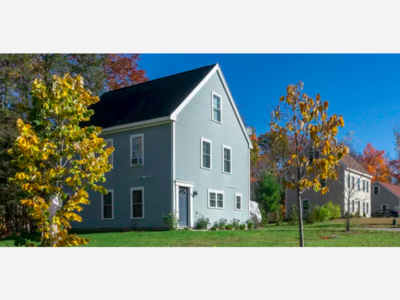
AFFORDABLE HOUSING FOR WORKING CLASS FAMILIES - Heading Home, Inc., a nonprofit provider of shelter, housing and support services for families and individuals, announced it is actively seeking to acquire a property to test what it calls “an innovative, scalable affordable housing solution for working-class families across Massachusetts.”
Requirements for the lot include approximately one-half acre of buildable land, ideally located in a by-right zoning district in Eastern Massachusetts. Heading Home plans to build a 6-to-12-unit modular structure on the property consisting of 2- and 3-bedroom apartments. The organization expects to rent the units for $1,500 to $2,200 per month to households earning between $58,000 and $115,000 annually or 50% to 80% of Area Median Income.
Supporters explained that Heading Home is testing a model designed to work where the market and the subsidy system don't. The project will utilize a Massachusetts-based turnkey modular builder to reduce construction timelines and lower construction costs -- an efficient, cost-effective model that can be replicated across other communities. Financing for the pilot will include philanthropic donations, low-interest lending and private financing. Once the model has been tested and demonstrated to be financially sustainable, Heading Home plans to expand the initiative and continue developing additional housing using this self-sustaining approach.
They noted that Massachusetts continues to face a severe housing affordability crisis. In Greater Boston, a household now needs to earn close to $200,000 annually to afford a median-priced home in the region, or at least $120,000 per year to afford rent for a two-bedroom apartment in the suburbs. The average two-bedroom apartment in Boston and Cambridge rents for $4,300 per month, and around $3,000 per month in the suburbs.
"The state's affordable housing system currently serves only about 32 percent of eligible households,” said Danielle Ferrier, CEO of Heading Home. “The sector has spent decades prioritizing its resources for families in the lowest income brackets, while most for-profit developers are focused on their bottom line. The result is housing that's cost-prohibitive to a large share of the state's workforce. Many are forced to live paycheck to paycheck, struggling to cover the most basic costs of housing and food. That's just not acceptable."
QUOTABLE QUOTES
“Massachusetts has never lacked for strengths. But if the last few years have shown us anything, it's that those strengths are not permanent. They have to be fought for every day. And they have to be earned again by every generation. I want Massachusetts to remain the place where talented young people come to learn, work, innovate and stay.”
---Senate President Karen Spilka in a speech to the Greater Boston Chamber of Commerce Government Affairs Forum.
“The American Cancer Society represents one of the most important strengths we have as a state — people who devote their talent, ability and resources to finding cures and saving lives. Massachusetts is home to the world's leading research institutions, hospitals and life sciences companies because we have built an ecosystem that turns discovery into cures and hope for patients. President Trump's attacks on research funding are putting that progress at risk. Clinical trials are being delayed, talented researchers are leaving and promising discoveries are being put on hold. In Massachusetts, we are going to keep investing in research and science because the work happening here saves lives around the world.”
---Gov. Healey at the 19th Annual American Cancer Society Cancer Action Network Breakfast.
"For too long, working people have had to fight just to get our issues on Beacon Hill's agenda. These [Working Families Party] candidates have already spent their lives fighting for affordable housing, good jobs, strong schools, immigrant communities and economic justice. They're not running to continue business as usual. They're running to make sure working families come first."
---Josh Wolfsun, Massachusetts State Director for the new Working Families Party, announcing its endorsement of eight candidates for the Massachusetts Legislature.
“Massachusetts residents deserve clean, affordable energy, not greedy utilities robbing us monthly for obscene profits. If our senators are brave, their upcoming energy bill could set the standard nationwide for putting our communities and clean air over corporate profits.”
---Dan Zackin, Legislative Manager of 350 Mass, protesting what he calls Eversource’s corporate greed.
HOW LONG WAS LAST WEEK’S SESSION?
Beacon Hill Roll Call tracks the length of time that the House and Senate were in session each week. Many legislators say that legislative sessions are only one aspect of the Legislature’s job and that a lot of important work is done outside of the House and Senate chambers. They note that their jobs also involve committee work, research, constituent work and other matters that are important to their districts.
Critics say that the Legislature does not meet regularly or long enough to debate and vote in public view on the thousands of pieces of legislation that have been filed. They note that the infrequency and brief length of sessions are misguided and lead to irresponsible late-night sessions and a mad rush to act on dozens of bills in the days immediately preceding the end of an annual session.
During the week of June 8-12, the House met for a total of 11 hours and four minutes and the Senate met for a total of eight hours and 49 minutes.
Mon. June 8 House 11:00 a.m. to 3:15 p.m.
Senate 11:14 a.m. to 3:17 p.m.
Tues. June 9 No House session.
No Senate session.
Wed. June 10 House 11:00 a.m. to 5:34 p.m.
No Senate session
Thurs. June 11 House 11:01 a.m. to 11:16 a.m.
Senate 11:15 a.m. to 4:01 p.m.
Fri. June 12 No House session.
No Senate session.
Bob Katzen welcomes feedback at bob@beaconhillrollcall.com
Bob founded Beacon Hill Roll Call in 1975 and was inducted into the New England Newspaper and Press Association (NENPA) Hall of Fame in 2019.

Fog, with a high of 82 and low of 65 degrees. Fog in the morning, patchy rain nearby during the afternoon, fog overnight.