53° and Overcast



Image
If you have any questions about this week's report, e-mail us at bob@beaconhillrollcall.com or call us at (617) 720-1562.
Beacon Hill Roll Call
Volume 51 - Report No. 26
June 22-26, 2026
Copyright © 2026 Beacon Hill Roll Call. All Rights Reserved.
By Bob Katzen
GET A FREE SUBSCRIPTION TO MASSTERLIST – Join more than 30,000 people, from movers and shakers to political junkies and interested citizens, who start their weekday and Saturday mornings with MASSterList—the popular newsletter that chronicles news and informed analysis about what’s going on up on Beacon Hill, in Massachusetts politics, policy, media and influence. The stories are drawn from major news organizations as well as specialized publications.
MASSterList will be e-mailed to you FREE every Monday through Saturday morning and will give you a leg up on what’s happening in the blood sport of Bay State politics. For more information and to get your free subscription, go to: www.massterlist.com
THE HOUSE AND SENATE: Beacon Hill Roll Call reports local representatives' votes on roll calls from recent June sessions. There were no roll calls in the House or Senate last week.
FIREFIGHTERS (H 5491)
House 154-0, approved and sent to the Senate a bill that supporters said is designed to boost safety for firefighters and people conducting “hot work” including welding, plasma cutting and spark-producing construction. The measure was first proposed after the March 2014 deaths of firefighters Edward Walsh and Michael Kennedy who perished while fighting a fire that was caused by welders, working without a city permit, on a building next door to the brownstone in which they died. The bill requires the establishment of a system of public notification and recording of non-compliance with regulations.
The bill establishes penalties for violations including a fine up to $1,000 for a first offense; a fine up to $2,000 and/or a prison sentence of up to one year for a second offense; and for a third or subsequent offense, a fine up to .025 percent of the total project value or $10,000, whichever is greater, and/or imprisonment for up to 2.5 years
Other provisions increase from $25,000 to $250,000 the penalty for a wanton or reckless violation of the state building or fire code that causes serious bodily injury; add a penalty of up to $500,000 and/or up to seven years in prison for a wanton or reckless violation of the state building or fire code that causes death to any person; provide that a person found to have acted with criminal negligence may be determined to be criminally liable for damage or death stemming from repeated and reckless non-compliance; and require all certifications and training programs for cutting, welding and hot works processes to be performed using the existing National Fire Protection Association or equivalent program.
"While we can never undo the profound loss of Lieutenant Edward Walsh Jr. and Firefighter Michael R. Kennedy, we can honor their sacrifice by ensuring that the lessons learned from that tragic day are not forgotten," said Rep. Dan Cahill (D-Lynn), House Chair of the Committee on Public Safety and Homeland Security. "This legislation advances training, accountability and transparency to better protect workers, firefighters and the public from preventable fires caused by unsafe hot work practices."
“This legislation aims to protect workers in Massachusetts from relaxed workplace practices that can result in significant on the job injuries and severe fires that subsequently put firefighters in harm’s way,” said House Speaker Ron Mariano (D-Quincy).
“By making these crucial reforms we will ensure the safety of the general public and our first responders” said Rep. Aaron Michlewitz (D-Boston), Chair of the House Committee on Ways and Means.
(A “Yes” vote is for the bill.)
Rep. Jeffrey Roy Yes
$228 MILLION FISCAL 2026 SUPPLEMENTAL BUDGET (H 5496)
House 154-2, approved and sent to the Senate a $228 million fiscal 2026 supplemental budget that supporters said would address time-sensitive budget deficiencies, including winter storm recovery costs, public safety operations, substance abuse treatment services, homelessness assistance and emergency management expenses.
Snowstorm-related funding includes $159.8 million for snow and ice removal costs; $9.5 million for the Massachusetts Emergency Management Agency for costs associated with snow emergency response and recovery efforts; and $1.7 million for Massachusetts National Guard expenses related to winter storm response activities.
Other provisions include $22.5 million to support the implementation of no-cost calls for prisoners; $8.1 million for homelessness programs; $14 million for the Bureau of Substance Addiction Services; eliminating the $10 surcharge currently imposed on car-sharing rentals like Zipcar and Enterprise CarShare; and updating veterans’ bonus eligibility requirements by requiring a veteran to only currently be living in Massachusetts, rather than having had to live in the Bay State for at least six months before entering service, in order to qualify for certain veterans’ bonus payments.
“This legislation fulfills one of the Legislature’s most important responsibilities - ensuring that key state programs and services are adequately funded – a role that is especially critical during periods of fiscal uncertainty and increased strain on local budgets,” said House Speaker Ron Mariano (D-Quincy).
“This spending package will allow the commonwealth to settle critical deficiencies and put the difficult winter of a few months ago behind us,” said Rep. Aaron Michlewitz (D-Boston), chair of the House Committee on Ways and Means. “This legislation will also make critical reforms to how school construction grants are awarded to our cities and towns, and lead to online Lottery revenue to be directed toward early education costs.”
Neither one of the two GOP representatives who voted against the legislation responded to repeated requests by Beacon Hill Roll Call asking them why they opposed the measure. Those two representatives are Reps. Nick Boldyga (R-Southwick) and Marc Lombardo (R-Billerica).
(A “Yes” vote is for the bill. A “No” vote is against it.)
Rep. Jeffrey Roy Yes
ALSO UP ON BEACON HILL
DON’T MISS THIS “MEET THE MEDIA” EVENT - Join MASSterList and the State House News Service, in partnership with Axios Boston and Commonwealth Beacon, for the “Meet the Media” event. Now in its fourth year, this timely gathering brings together journalists and professionals in the communications and government affairs fields for a morning of connection, conversation and community.
The event is on Thursday July 16 from 8 a.m. (networking), and 9 a.m. to 10:30 a.m. (program) at the MCLE Conference Center, Downtown Boston - 10 Winter Place.
Get tickets and more information at: https://events.humanitix.com/massmedia
RENT CONTROL QUESTION WILL NOT BE ON THE NOVEMBER BALLOT – The state’s Supreme Judicial Court (SJC) ruled that an initiative petition to repeal the state's 31-year ban on rent control does not qualify to go on the November ballot despite the fact that supporters gathered sufficient signatures to place the question on the ballot. The court cited a constitutional amendment that prohibits several types of proposals, including one that relates to religion, religious practices or religious institutions, from being the subject of a ballot question.
The ballot question would have limited annual increases on most residential units to the lower of inflation or 5%. It also specified that facilities operated solely for religious purposes would be exempt from the cap. A group of plaintiffs opposed repealing the law brought a suit that claimed the petition should be disqualified because of the religious exemption. The SJC agreed.
Attorney General Andrea Campbell had previously certified the question for the ballot, arguing that the petition was just a rent control matter and dismissing the religious problem. Following the decision, Campbell acknowledged that the SJC "ruled against us and said we got that wrong." She said her office went into the SJC hearing understanding that the court may focus on the relationship between the petition and religion. "But we said to the court at the time that the initiative exempts a number of types of housing, including nonprofit housing. And the exemption for religious uses was a minor one within the broader petition. The court disagreed and said that even a minor reference to religion is not appropriate for a ballot initiative," Campbell said. "I think it was only the second time that the court has reviewed this standard, so it's not like it happens frequently. We were surprised, but of course we will follow the court's ruling and move forward. And this ballot question will not move forward to the ballot."
Reaction to the ruling was quick.
“Today’s decision is a major victory for the people of Massachusetts,” said Paul Craney, Executive Director of the Fiscal Alliance Foundation. “The court found this ballot question could not legally proceed and the commonwealth is better off because of it. Rent control has failed wherever it has been tried and this proposal would have brought one of the most damaging versions of that failed policy to every community in Massachusetts. At a time when our state desperately needs more homes, this ballot question would have made it harder to build, harder to maintain rental housing and more expensive to own a home.”
"Today the Supreme Judicial Court confirmed that the nation’s most extreme rent control proposal was unconstitutional,” said Conor Yunits, chair of the Housing for Massachusetts committee that was formed to oppose the ballot question. “While we firmly believe that Massachusetts voters were prepared to vote “No’ in November, today’s decision puts the issue to rest and protects our housing pipeline and our communities from the proven damage that rent control inflicts."
Rent control supporters called Tuesday's ruling from the SJC "a massive disappointment" but also said that "it's far from the end of our campaign to protect Massachusetts renters from excessive rent hikes." They noted that they plan to mount a campaign to get the question on the 2028 ballot.
"While we disagree with the court’s interpretation, the issue raised by the court is easily fixable, and doesn’t affect the substance of our proposal," said Noemi "Mimi" Ramos, chair of the Keep Massachusetts Home campaign.”
AUTISM AND POLICE STOPS (H 5438) – Gov. Healey signed into law legislation designed to improve interactions between police officers and persons with autism spectrum disorder during traffic stops. This program was adopted by the Massachusetts State Police in 2024 but was not an actual law. This bill would codify the program into Massachusetts law.
The measure, dubbed the “Blue Envelope Bill," would create a program giving people with the disorder the option to be given a special blue envelope that holds the person’s driver’s license and vehicle registration. On the outside of the envelope there would be written information and guidance regarding ways to enhance effective communication between a police officer and a person with autism spectrum disorder. The envelope must also include instructions for access to the envelope, including attaching it to the sun visor on the driver’s side of the vehicle. The bill is designed to enable the driver to quickly and easily hand the envelope to a police officer during a traffic stop.
“Every person deserves to feel safe and understood during an interaction with law enforcement,” said Gov. Healey. “This law will help improve communication, reduce uncertainty and support better outcomes for individuals with autism, their families and the officers who serve our communities.”
“The Blue Envelope Program reflects the longstanding commitment of state and local police to build trust and support successful interactions with members of the autism community,” said Public Safety and Security Secretary Gina Kwon. “This legislation ensures the program, which began several years ago through the initiative of the Massachusetts State Police and the Massachusetts Chiefs of Police Association, will continue with the full support of state law. In addition to this important tool, public safety officials across the commonwealth will continue to deepen their understanding of this community’s needs through enhanced training and outreach to neighbors we serve.”
“Today, as Gov. Healey signs the Blue Envelope Bill into law, the commonwealth affirms its commitment to individuals living with autism spectrum disorder,” said Sen. Jo Comerford (D-Northampton), the Senate lead sponsor of the measure. “By codifying the Blue Envelope program, we are advancing safer, more informed interactions during traffic stops and other public emergencies — making permanent a simple but powerful tool for drivers and first responders alike. This milestone reflects the tireless advocacy of families, organizations, law enforcement and individuals with lived experience whose voices propelled this effort and brought us closer to a commonwealth where everyone can thrive.”
"The Massachusetts State Police are grateful that the Blue Envelope legislation will expand access to Blue Envelopes for drivers on the autism spectrum across Massachusetts,” said Col. Geoffrey Noble of the Massachusetts State Police. “Since launching the program in 2024, our troopers have witnessed firsthand how these envelopes improve communication during traffic stops, helping drivers and officers navigate interactions more safely and effectively. The program empowers drivers to communicate their needs while providing law enforcement officers with information that helps them respond appropriately and with greater understanding. By promoting communication, preparedness and mutual respect, the Blue Envelope program strengthens trust between law enforcement and the communities we serve while helping create safer outcomes for everyone involved."
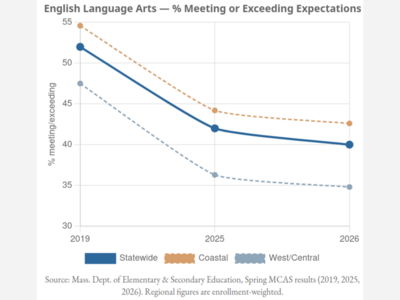
LITERACY EDUCATION STANDARDS (H 5511) – Gov. Healey signed into law a bill dealing with teacher preparation and student literacy. The measure would establish clear statewide standards for evidence-based reading instruction—requiring the teaching of phonics, ensuring access to high-quality K-3 curricula, enhancing educator training and support and creating new reporting and accountability systems.
The bill defines evidence-based early literacy as instruction featuring phonics, fluency, vocabulary, comprehension and phonemic awareness, and is demonstrated to produce significant and positive effects on student learning outcomes. It prohibits curricula that are not evidence-based and curricula that rely on implicit or incidental word reading strategies.
Another provision formalizes dyslexia and literacy screening requirements by requiring schools to develop protocols for identifying potential neurological learning disabilities, including dyslexia, and to report their screening practices annually.
"Massachusetts is the best state in the nation for education, but we know there is a lot more that needs to be done, especially when it comes to early literacy,” said Healey. “Helping students learn to read is one of the most important things we can do to set them up for success. This legislation builds on the work we’ve been doing through Literacy Launch and high-dosage tutoring by giving schools and educators the tools they need to support every student.”
"Reading opens doors,” said Lt. Gov. Kim Driscoll. “Whether it's succeeding in school, pursuing higher education or building a career, strong literacy skills create opportunities that last a lifetime. This legislation will help more students build those skills by giving educators additional tools to identify challenges early and provide support when it's needed most."
“This is a pivotal moment for children across our state as the governor signs this critical legislation I filed to ensure every student gains essential literacy skills,” said sponsor Sen. Sal DiDomenico (D-Everett). “We all recognize that teaching our kids to read and write is one of the most fundamental responsibilities we have, yet far too many students are still falling short of basic literacy benchmarks. As co-chair of the conference committee, I was proud to collaborate with many educators to craft evidence-based policies that will strengthen early literacy instruction and set our students on a path to lifelong success.”
CHANGE “HEARING IMPAIRED” TO “DEAF OR HARD OF HEARING” (S 3142) – The Senate approved and sent to the House a bill that would strike outdated language from state laws that refer to people who are deaf or hard of hearing as being “hearing impaired.” The legislation replaces the term “hearing impaired” with the phrase “deaf or hard of hearing.”
“Words shape how we see one another, and our laws are no exception,” said Senate Majority Leader Sen. Cindy Creem (D-Newton). “This bill takes a simple but important step toward ensuring that the words we use reflect respect, accuracy and the preferences of the communities they describe. I’m proud the Senate is taking decisive action to help modernize our statutes and affirm the dignity of deaf and hard of hearing individuals across Massachusetts, and I’m grateful to the students of Newton’s CAPS Deaf and Hard of Hearing Program for bringing this issue to my attention.”
“Members of the deaf and hard-of-hearing community have been advocating for this change for years, and they made a compelling case that the language currently found in our laws no longer reflects the people it is meant to describe,” said Sen. Nick Collins (D-South Boston), Senate chair of the Committee on State Administration and Regulatory Oversight. “This legislation makes a commonsense update to our statutes and reflects the respect that community deserves. Our laws should evolve alongside the people they serve, and it is important that the language we use reflects both the dignity of all residents and the commonwealth’s commitment to treating every person with respect. It is a small change on paper, but an important step in ensuring our laws continue to reflect the values of Massachusetts.”
QUOTABLE QUOTES
“Housing costs remain one of the biggest challenges facing communities across our state, but this data shows that we are making meaningful progress. Adding nearly 35,000 homes in a single year is an important milestone, and it reflects the commitment of local leaders, planners, builders and residents who are helping create more housing opportunities in every region of Massachusetts. We know there is more work to do, and we're committed to keeping up the momentum.”
---Lt. Gov. Kim Driscoll announcing that Massachusetts added more than 34,500 new homes in 2025, marking strong early progress toward the state's goal of creating 222,000 homes between 2025 and 2035.
“Repealing recreational cannabis laws in Massachusetts will not only take us backwards - it will negatively impact our communities that are already struggling with budget shortfalls and locally owned small businesses that have invested their life savings into building their legal businesses that create jobs and support local economies. Since legalization, the cannabis industry has brought in close to $2 billion in state and local revenue, generated hundreds of millions of dollars annually in support of public health, public safety and many other wide-reaching community investments.”
---Ryan Dominguez, chair of the “Stop the Repeal Campaign,” a group that is working against the possible November 2026 ballot question that would repeal the 2016 voter-approved legalization of recreational marijuana.
“This is an important moment in time to support civics education and make sure that students are informed, engaged and empowered to actively participate in society and democracy. We are glad to provide these resources for educators to help them support our students today become our leaders of tomorrow.”
---Secretary of Education Steve Zrike on the creation of Teaching for Civic Empowerment, a new professional learning initiative designed to strengthen civics instruction by providing free, high-quality professional learning opportunities to 6,000 educators over five years to increase educator confidence and expertise with civics instruction.
“Small Business Administration loans help eligible small businesses and private nonprofits cover operating expenses after a disaster, which is crucial for their recovery. These loans not only help business owners get back on their feet but also play a key role in sustaining local economies in the aftermath of a disaster.”
---Chris Stallings, Associate Administrator of the Office of Disaster Recovery and Resilience at the Small Business Administration, announcing the availability of low-interest federal disaster loans to small businesses and private nonprofit organizations in Massachusetts to offset their economic losses caused by the blizzard that occurred from Feb. 22–27.
HOW LONG WAS LAST WEEK’S SESSION?
Beacon Hill Roll Call tracks the length of time that the House and Senate were in session each week. Many legislators say that legislative sessions are only one aspect of the Legislature’s job and that a lot of important work is done outside of the House and Senate chambers. They note that their jobs also involve committee work, research, constituent work and other matters that are important to their districts.
Critics say that the Legislature does not meet regularly or long enough to debate and vote in public view on the thousands of pieces of legislation that have been filed. They note that the infrequency and brief length of sessions are misguided and lead to irresponsible late-night sessions and a mad rush to act on dozens of bills in the days immediately preceding the end of an annual session.
During the week of June 22-26, the House met for a total of 29 minutes and the Senate met for a total of six hours 47 minutes.
Mon. June 22 House 11:00 a.m. to 11:09 a.m.
No Senate session.
Tues. June 23 No House session.
Senate 11:09 a.m. to 5:45 p.m.
Wed. June 24 House 11:00 a.m. to 11:13 p.m.
No Senate session
Thurs. June 25 House 11:00 a.m. to 11:07 a.m.
Senate 11:09 a.m. to 11:20 a.m.
Fri. June 26 No House session.
No Senate session.
Bob Katzen welcomes feedback at bob@beaconhillrollcall.com
Bob founded Beacon Hill Roll Call in 1975 and was inducted into the New England Newspaper and Press Association (NENPA) Hall of Fame in 2019.


Overcast, with a high of 61 and low of 47 degrees. Patchy rain nearby during the morning, overcast in the afternoon, clear during the evening, overcast overnight.