53° and Overcast
Image
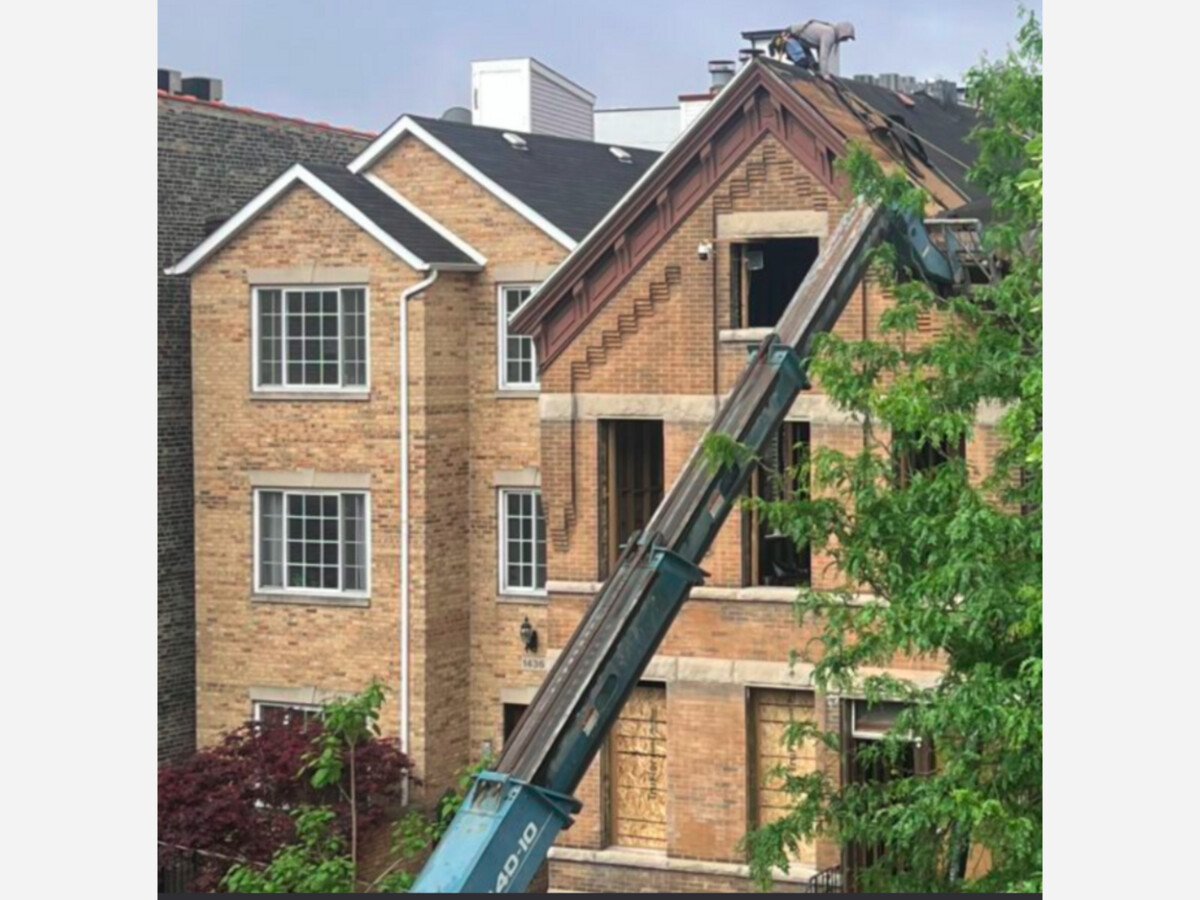



A construction worker balances atop a roof. States and cities are loosening building code requirements in an effort to lower construction costs and boost affordable housing. (Photo by Robbie Sequeira/Stateline)
By Robbie Sequeira - June 23, 2026
States and cities are loosening building code requirements in an
effort to lower construction costs and boost affordable housing.
Some of these changes include allowing low-rise apartment buildings
to have just one stairway, reducing how often building codes are updated
and rolling back specific electrical or fire safety standards.
But critics have raised safety concerns, noting that existing rules
were shaped by past tragedies and aim to prevent future harm.
For example, having only one staircase could allow a developer to add
another unit or expand the size of units, said Nicolle Aube, principal
and founder of Civex, a planning and civil engineering consulting
firm, and an American Planning Association board member.
“But then there’s this flip side, that by removing these codes and
protections, it carries this additional risk for the developer and the
occupants of the building if the worst-case scenario happens,” she said.
Many states are considering single-stairway apartment laws.
They generally take one of four approaches, said Alex Horowitz,
housing policy director at The Pew Charitable Trusts: begin with a
study, allow single-stairway buildings statewide, update the state
building code while letting local governments opt out, or give
localities authority to allow them. Pew has lobbied for and testified in
favor of the changes.
Two national developments could make it easier for more states and cities to allow single-stairway buildings, Horowitz said.
The first are proposed updates by the International Code Council, the
organization that develops the model codes many states use as the basis
for their building rules. An update to its multifamily code, for example, would allow single-stairway buildings to add a fourth story.
Second, the bipartisan 21st Century ROAD to Housing Act moving
through Congress would direct the U.S. Department of Housing and Urban
Development to develop model guidelines for residential buildings with a
single stairway not exceeding six stories.
According to Pew,
19 states and Washington, D.C., introduced bills between 2022 and 2025
to study or allow single-stairway apartment buildings, and seven states
passed them in 2025 alone.
This year, Idaho enacted a new law
that allows local governments to permit certain apartment buildings to
use one stairway — generally up to six stories without an occupiable
roof, or five stories with one, along with limits on units per floor,
sprinklers, stair width, and smoke and fire detection.
Colorado’s law
enacted last year requires certain municipalities to modify their
building codes by Dec. 1, 2027, to allow five-story multifamily
residential buildings to be served by a single exit. Texas’ 2025 law lets municipalities authorize single-stairway apartment buildings up to six stories.
Colorado state Rep. Andrew Boesenecker, a Democrat who sponsored the
new law, came to this issue because the state needed to find a way to
make smaller multifamily projects more feasible. He said the policy can
help on infill lots where a traditional two-stairway apartment building
may not fit.
“Single stairway or smart stairway buildings are not only a very safe
way to build multi-family housing, they also bring a product to market
that’s just not being offered,” Boesenecker said.
Colorado is one 16 states without a statewide building code, making
local implementation a major focus. Boesenecker said lawmakers had to
look at “ways that you can make it feasible through local governments to
adopt this standard into their building code.”
He said the work to get the support of those skeptical of
single-staircase legislation happened a year prior to the bill’s
passage, when lawmakers worked with fire chiefs, fire marshals and
firefighters’ unions for about a year to get them to a “neutral
position” on the bill.
In Texas, Democratic state Sen. Nate Johnson said the law he
sponsored will allow for architectural innovation as well as maximizing
multi-family housing on odd-shaped and smaller lots.
Johnson said modernizing building codes does not come at the risk of safety.
“Who knows what policies once served well and now, after decades of
technological advances and changes in land use, impede good design?”
Johnson said. “We have regulations for a reason, and I’m not for
throwing out what protects the public. Markets tend to easily meet the
challenges of sound regulatory protections.”
Lawmakers in Illinois, New York and Rhode Island considered
single-stairway bills this year, but none passed before the legislatures
adjourned for the year.
But moving in the opposite direction, Connecticut lawmakers this year repealed the single-stairway law they had passed in 2024, after objections from fire safety officials.
Beyond staircases, Horowitz, of Pew, said this year saw the first
legislative sessions in which states have taken a look at elevators to
reduce building costs. Washington state enacted a new elevator law
this year that directs the state’s Building Code Council to allow
smaller apartment buildings, with at most six stories and 24 units, to
use smaller and less expensive passenger elevators.
Maine removed
some elevator-related requirements, including for certain smoke and
draft equipment and for two-way emergency video communication systems
inside elevators.
Research by the Center for Building in North America,
a nonprofit research group that co-authored Pew’s single-stairway
report, found that installing elevators in the United States and Canada
is at least three times as expensive as in Western Europe or East Asia.
U.S. and Canadian installations start around $150,000, compared with
roughly $50,000 in several high-income countries, the group found.
Pew researchers found that modern four- to six-story single-stairway
apartment buildings can be as safe as other residential buildings when
they include fire-safety features such as sprinklers, smoke detectors,
code-compliant drywall, self-closing doors and protected stairways.
Horowitz said Pew researchers counted every fire death in New York
City and Seattle — two cities that have long allowed single-stairway
apartment buildings — over 12 years.
In New York City, Pew identified 4,440 modern single-stairway
buildings and found their fire-death rate was the same as other
residential buildings — about five deaths per million occupant-years.
Pew also found that the deaths it identified in modern single-stair
buildings appeared to occur in the unit where the fire started, not
because smoke or fire penetrated the single stairway.
“Modern apartment buildings are much, much, much safer than other
housing. It is not even close,” Horowitz said. “The data is clear and
policymakers are following the data in this instance.”
But Sean DeCrane, the director of fire fighter health and safety
operational services for the International Association of Fire Fighters,
said single-stairway proposals often fail to account for residents’
potential slowness to evacuate during a fire, and how firefighters use
the same stairwell to reach trapped occupants.
The IAFF cites as one example a Manhattan apartment fire on May 4
that killed three people and injured 14. The fire that trapped residents
in a smoke-filled stairwell serving as the building’s only means of
escape. IAFF says the fire appeared to start on the first floor and
spread upward through the stairwell.
“When we take over the stairwell, occupant egress effectively stops,”
DeCrane told Stateline. “So now you’re requiring firefighters to
physically remove occupants out of a burning building.”
During a fire, residents may not leave when an alarm first sounds, he
said, especially in apartment buildings where false alarms or smoke
alarms from a kitchen mishap are common. Some residents do not try to
evacuate until they smell smoke or believe they are in danger.
“Just because they hear an alarm doesn’t necessarily signify risk to them.”
Aube, of the American Planning Association, said state lawmakers
should learn from California’s approach — which in 2023 directed the
state fire marshal to study single-stair buildings — before lawmakers
make building codes changes.
“There is a lot of technical information that lawmakers and the
public need to learn before considering removing a code,” she said.
The California Office of the State Fire Marshal released that report
early this year. It said safeguards such as sprinkler and smoke
detectors “do not fully substitute” for having two stairwells and notes
that fire departments in the state nearly unanimously oppose single
stairways. But it suggested a variety of measures that should be
implemented if single-stairway buildings are allowed.
In recent years, some states have changed parts of their fire and
electrical codes, seeking to make a dent in the total cost of a project.
Arizona last year barred counties from requiring fire sprinklers in accessory dwelling units.
Indiana this year barred
state and local governments from requiring arc fault circuit
interrupters, or AFCIs, in certain residential buildings and emergency
responder communication systems in some larger structures. AFCIs prevent
electrical fires by detecting arcing in damaged or loose wiring before
it builds heat inside a wall.
The Indiana bill’s lead sponsor, Republican state Rep. Doug Miller,
said the state needed to “put a stake in the ground” to meet its need of
roughly 50,000 homes, according to the Indiana Capital Chronicle. The Indiana Builders Association said local rules accounted for 24% of the cost for a new home.
This year, Iowa changed parts of the state electrical code, including AFCI and GFCI requirements. Ground fault circuit interrupters, or GFCIs,
are designed to protect people from electric shock by shutting off
power when they detect a fault in the current. Supporters said these
changes can help keep electrical costs low for builders and consumers.
Iowa Democratic state Rep. Jeff Cooling, who is also an electrician,
said the late-session legislation takes away some kitchen GFCI
requirements, removes AFCI requirements and allows cheaper ceiling boxes
in places where future homeowners may install heavy fixtures or ceiling
fans. He opposed the bill.
Cooling said lawmakers often talk about code changes as a way to
shave costs from new housing. But as an electrician, he said many of
those requirements were adopted for a reason and usually after
high-profile injuries, fires or deaths prompted necessary review and
updates.
“None of these codes change just to change them,” Cooling said.
“They’ve changed because people have been seriously injured or killed.”
Cooling said fellow electricians he spoke with estimated the Iowa
changes would save about $850 on an average new house. “That’s a
rounding error,” he said.
And for Cooling, that amount of savings is too small to justify removing protections at the sake of human lives.
“It’s not the world that we want to live in where we try to balance safety and what turns out to be low-cost savings,” he said.
Building codes are usually updated every three years through a public
process, while states and local governments retain authority to amend
and enforce them.
A new law
passed in Connecticut will stretch what is normally a three-year state
building code update schedule into a six-year gap, pausing updates
between 2024 and 2030 cycles. The state is expected to produce a report
due by Jan. 1, 2029, that will evaluate the effects of a six-year cycle
for building code revisions.
Housing industry groups say Connecticut is not alone in extending or
pausing the time between adopting building code changes. Last year,
California froze most residential code changes through June 2031. North
Carolina moved its residential code to a six-year review cycle in 2023.
The Connecticut proposal drew opposition from code officials and the
International Code Council. Building officials and code organizations
have warned that slowing adoption of new codes can also delay updates meant to respond to new risks.
Aube, the urban planner, said that code changes are not a silver bullet in the affordability puzzle.
“There’s not one answer,” she said. “It’s like making a cake, right? There’s a whole bunch of different ingredients that go in.”
Stateline reporter Robbie Sequeira can be reached at rsequeira@stateline.org.
This story was originally produced by Stateline,
which is part of States Newsroom, a nonprofit news network which
includes Rhode Island Current, and is supported by grants and a
coalition of donors as a 501c(3) public charity.



Overcast, with a high of 61 and low of 47 degrees. Patchy rain nearby during the morning, overcast in the afternoon, clear during the evening, overcast overnight.