55° and Cloudy
Image



16 June 2026
When the New England Clean Energy Connect transmission
line started carrying electricity from Canada into Maine in January,
supporters hailed the project as a triumph for renewable power. Now,
after nearly six months of operations, the early numbers raise questions
about whether the project will be able to advance the region’s energy
transition as much as advertised.
Energy flow into New England is up just marginally, and there have been roughly 27 days when no power at all traveled along the new line, commonly called NECEC.
If current trends hold, New England will receive less hydropower this
year over two transmission lines than it did over just one line in 2023 and previous years.
“What we’ve seen so far is
not what some people expected to see,” said Joseph LaRusso, manager of
the Clean Grid Program at climate nonprofit Acadia Center.
Potentially putting further strain on the supply of
Canadian hydropower is the Champlain Hudson Power Express,
a transmission line that started sending electricity from Quebec into
New York City this month.
NECEC has its origins in a 2016 Massachusetts law that required the state to procure 1.6 gigawatts of offshore wind power and another 1.2 gigawatts
of additional renewable energy. The plan was to contract with
state-owned Canadian power supplier Hydro-Québec to tap into the
region’s abundant hydropower resources and build a new transmission line
to carry the electricity south.
The first proposal — a 192-mile project through New Hampshire — was abandoned in 2019 after public outcry about the impact on the state’s forests. The transmission line through Maine faced similar controversy. In 2021, a statewide referendum vote put the project on hold until 2023, when a jury ruled that the development could be restarted.
Two and a half years later, NECEC
came online and started carrying the first electrons into New England.
It’s certainly a notable achievement in a time when the Trump
administration has been doing all it can to stop progress on clean
energy, including offshore wind — the cornerstone of the Northeast’s
decarbonization plans. And although the results so far have been mixed,
some see potential for the line to make a sizable impact on New
England’s clean energy future.
When NECEC came online earlier
this year, Massachusetts Gov. Maura Healey, a Democrat, and climate
advocates touted it as a major win for the state’s renewable energy
goals and a way to save residents money on their utility bills.
Massachusetts contracted with Hydro-Québec for 9.55 terawatt-hours of hydropower per year, roughly 20% of the state’s annual electricity demand.
The operations have not had the smoothest start. NECEC was completely inactive for several spans — from a half day on April 28 to nearly two weeks at the end of May and beginning of June. The most recent outage was due to “technical difficulties,” Hydro-Québec spokesperson Lynn St-Laurent said in a written statement.
“Once repairs were completed, deliveries resumed,” she said. “With any new transmission infrastructure, a period of optimization and fine-tuning is to be expected.”
Still, most of the time, hydropower has flowed steadily
on the new infrastructure. Through the end of April, Hydro-Québec
exported about 2.4 terawatt-hours of power on the transmission line.
If the power is (mostly) moving as planned, why are
some people still skeptical that the project will deliver the promised
benefits? Because so far, it hasn’t done much to add to the total supply
of renewable energy in New England.
Before NECEC, New England already imported significant amounts of hydropower on a transmission line known as Phase 2, which runs from Quebec into central Massachusetts. In 2019, the year the Massachusetts regulators approved the contracts between utilities and Hydro-Québec, more than 12 terawatt-hours traveled onto the New England grid over the line.
But starting in 2023, Hydro-Québec started selling less and less energy to New England over Phase 2. For nearly three weeks in early 2025, exports ceased entirely.
Through the end of April this year, just over half a terawatt-hour has
come south over that line. On paper, it can look a lot like NECEC isn’t allowing more energy into New England but is instead just giving it a new road to travel along.
“We’re not seeing much net
new flows coming from our neighbors,” said Dan Dolan, president of the
New England Power Generators Association. “We are running pretty close to the net energy flows we had in 2025, which were the lowest amount of imports that New England has ever gotten from Quebec.”
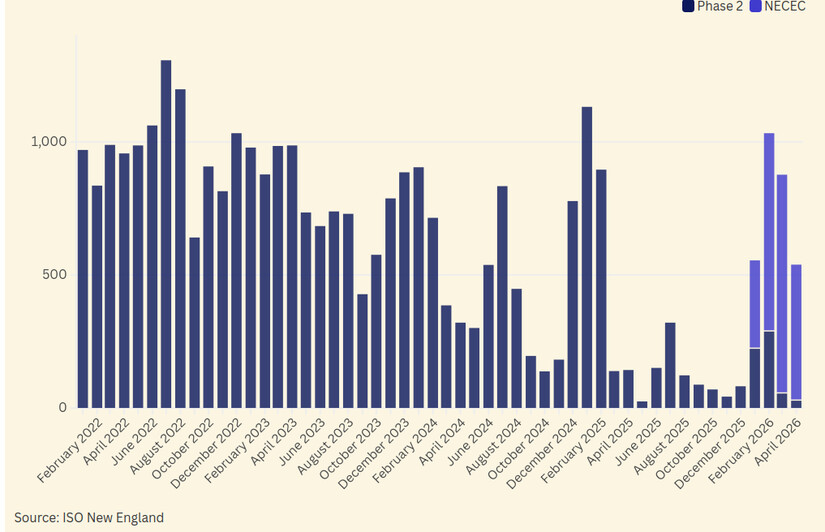
At the same time, Quebec has started importing power over the Phase 2 line, a rare occurrence before 2025. In the first four months of this year, more than 500 gigawatt-hours
traveled into Canada on the line. Because New England’s electricity
supply relies heavily on natural gas generation, the region is still
burning fossil fuels to ship energy north even though it is receiving
hydropower for its own use.
“We’re seeing a heavier
natural gas burn on the rest of the generation fleet than I think many
of those states had assumed going into this year,” Dolan said.
The main driver behind slowing exports seems to be the
drought conditions that have lingered in Quebec for the past few years.
During wetter periods, the hydropower industry uses large reservoirs to
store water to help it ride out these drier times, said Gilbert Bennett,
a senior adviser for WaterPower Canada, a hydropower trade group.
As generators wait for rainier days, their first
obligation is to supply domestic customers, he said. That means there
will likely be times when Hydro-Québec needs to import electricity over
the Phase 2 line to offset some of the hydropower it is contractually obliged to send to Massachusetts over NECEC.
“Electricity flows between
Québec and New England are dynamic and vary continuously based on market
conditions and system needs on both sides of the border,” St-Laurent
said.
Financially, New England customers should not be at
risk from these ongoing shifts, LaRusso said. Massachusetts’ contract
with Hydro-Québec includes provisions that require the Canadian company
to pay financial penalties if it fails to deliver according to its
contract.
“To the extent that imports
are curtailed, Hydro-Québec is liable to make the electric utilities
whole for the cost of replacement power,” LaRusso said.
It is less clear whether NECEC will boost Massachusetts’ renewable energy supply in the long run.
Still, the new transmission line has at times
demonstrated its potential to help New England achieve a cleaner energy
supply, LaRusso said. He pointed to May 16, a sunny day when solar power reduced demand on the grid and NECEC
was going full tilt. Natural gas plants were running at low levels, and
most of the power was heading to New York. For a short time, all the
region’s power needs could be met by nonfossil fuel resources.
“Hypothetically, [grid operator] ISO New England could’ve turned off its gas generators,” LaRusso said. “It really gets you thinking of the resources available and how they could be managed and shared in the future.”
Bennett is also confident in the long-term outlook. In
general, he said, climate change is forecast to create wetter conditions
in Quebec. And the region is investing heavily in additional hydropower
facilities as well as onshore wind. The years to come, he said, will
bring plenty of renewable resources to share with Canada’s southern
neighbors.
“Over the long term, we see a bright future,” Bennett said.
Sarah Shemkus
is a reporter at Canary Media who is based in Gloucester, Massachusetts, and covers New England.
Reprinted with permission from Canary Media
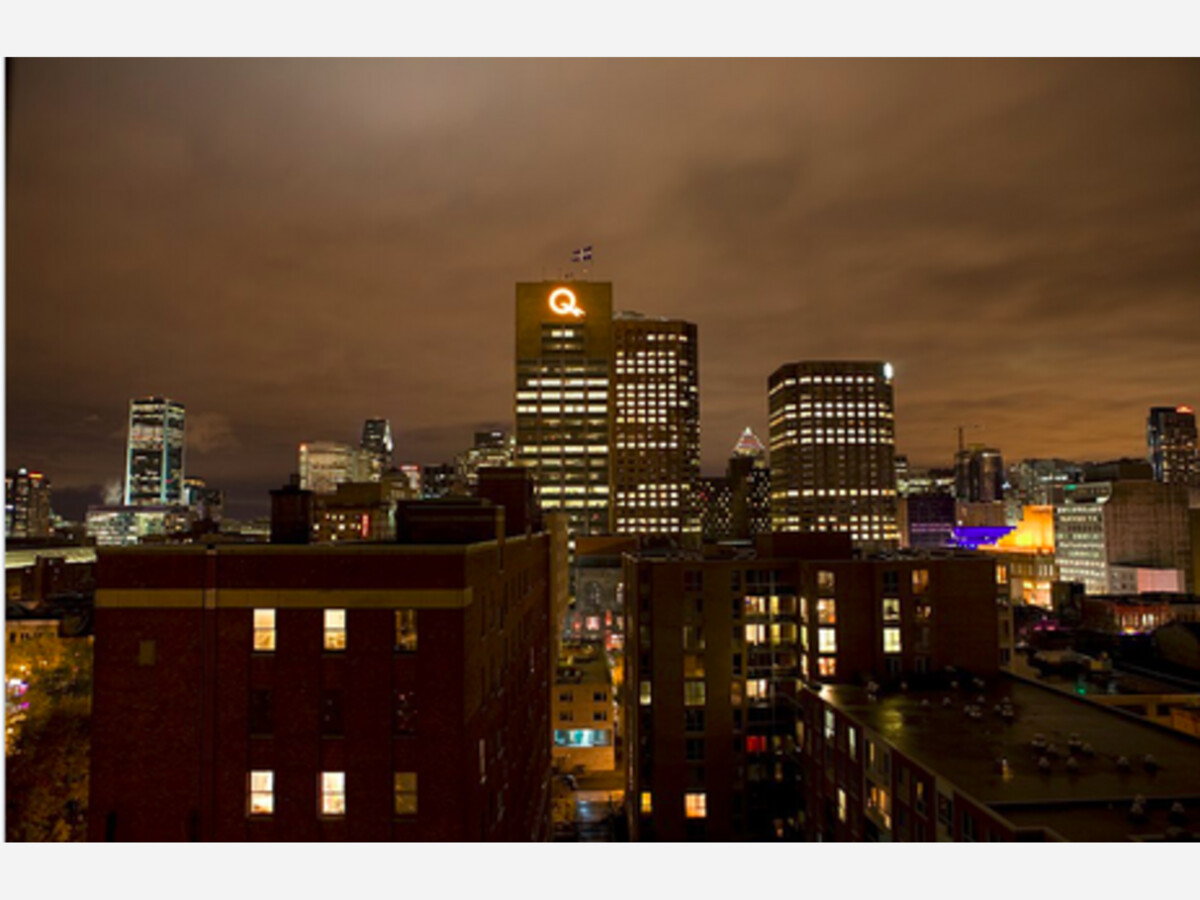
IMAGE: Hydro-Quebec building in Montreal



Sunny, with a high of 60 and low of 39 degrees. Sunny for the morning, cloudy in the afternoon, overcast for the evening, clear overnight.