52° and Overcast
Image



The great Jewish writer Isaac Bashevis Singer said: “When a day passes it is no longer there, what remains of it? Nothing more than a story…The whole world, all human life, is one long story.”
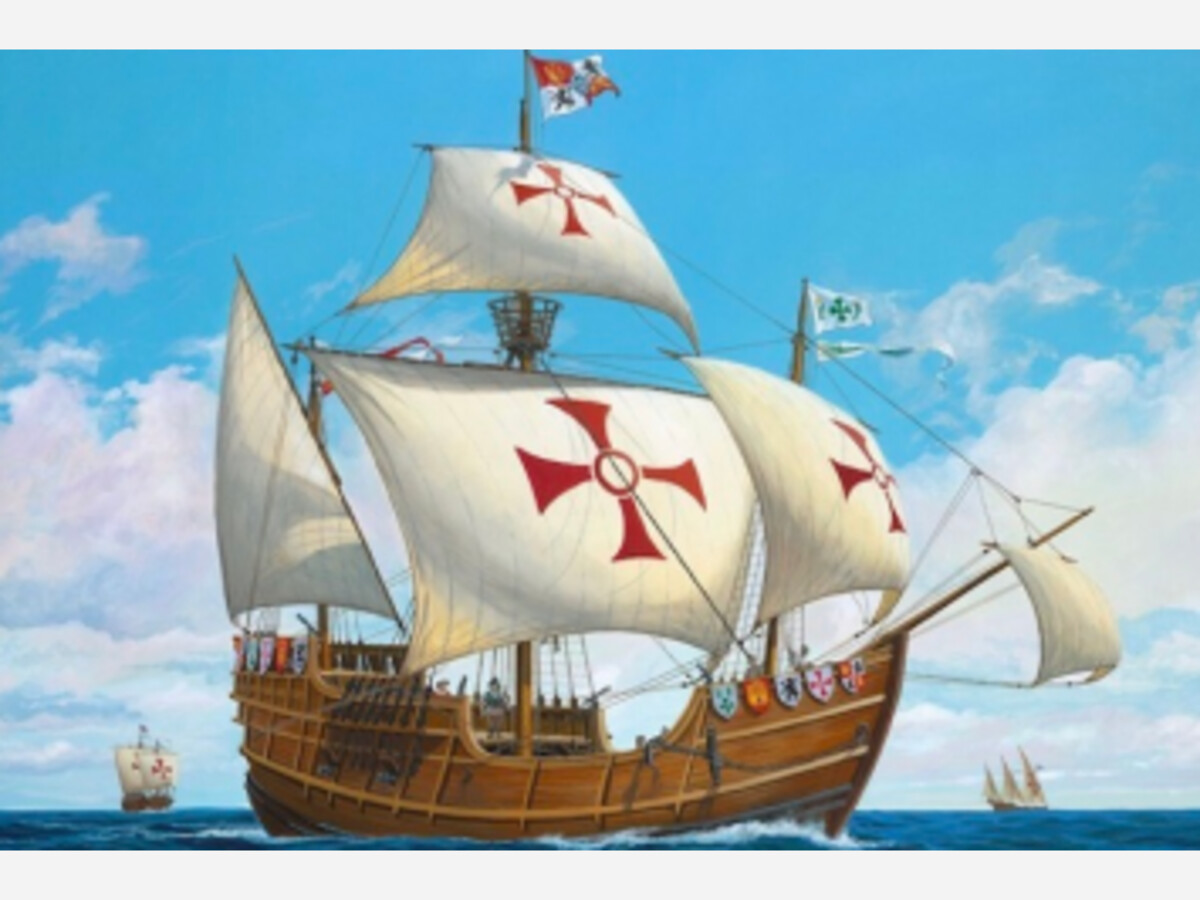
A major event in our one long story of human life, was the discovery of America by Christopher Columbus. It was as we like to say, a game changer, or a paradigm shift. A paradigm shift is a change in the basic assumptions, methods, and picture of the world that people use to make sense of things.
In his book on Columbus, Admiral of the Ocean Sea, Samuel Eliot Morison paints a picture of the Old World at the time of Columbus: “At the end of the year 1492 most men in Western Europe felt exceedingly gloomy about the future. Christian civilization appeared to be shrinking in area and dividing into hostile units as its sphere contracted. For over a century there had been no important advance in natural science, and registration in the universities dwindled as the instruction they offered became increasingly jejune and lifeless. Institutions were decaying, well-meaning people were growing cynical or desperate, and many intelligent men, for want of something better to do, were endeavoring to escape the present through studying the pagan past.”
Columbus was born about 100 years after the Black Death killed over half the people of Genoa, Italy where he was born. If it had claimed the lives of either of his great grandparents then Columbus would never have been born. 1492 was when the papacy hit rock bottom with the election of the corrupt political Borgia Pope. Europe was besieged and losing ground to militant Islam. The traditional overland Silk Road trade route between Europe and the Far East was increasingly hindered by lawless banditry, war, and by the stiff taxes of the Ottomans who had gained control. That is why Portugal began pushing for a seaward passage around Africa and why Columbus sought a westward shortcut to reach the Indies.
Such was the state of affairs that Samuel Eliot Morison writes about: “With the practical dissolution of the Empire and the Church’s loss of moral leadership, Christians had nothing to which they might cling… Belief in the institutions of their ancestors was wavering…Throughout Western Europe the general feeling was one of profound disillusion, cynical pessimism, and black despair.
And then the voyage and discovery of the New World by Columbus changed everything. A new day dawned after a long dark night. As historian Sir Charles Oman wrote, “A new envisagement of the world has begun, and men are no longer sighing after the imaginary golden age that lay in the distant past, but speculating as to the golden age that might possibly lie in the oncoming future.”
The discovery of the New World by Columbus put the wind back in the sails of Europe. Morison writes: “In a few years we find the mental picture completely changed. Strong monarchs are stamping out privy conspiracy and rebellion; the Church, purged and chastened by the Protestant Reformation, puts her house in order; new ideas flare up throughout Italy, France, Germany and the northern nations; faith in God revives and the human spirit is renewed. The change is complete and astounding…Europe’s new confidence in herself nearly doubled the area of Christianity, enlarged indefinitely the scope for human thought and speculation, and ‘Led the way to those fields of freedom which, planted with great seed, have now sprung up to the fructification of the world.’ ”
The story of America, as it is today, begins in the middle of Europe’s history. For as writer Lewis Mumford writes, “The settlement of America had its origins in the unsettlement of Europe.”
This part of our story, of Europe and the discovery of America by Columbus, perhaps resonates with us today when so many seem to find our present milieu also to be jejune and lifeless and wonder if the institutions we rely on are all they are meant to be.
Many today vilify Columbus as if he somehow had nothing but bad intentions and purposefully inflicted misery on the Mesoamericans. It seems naive and willfully ignorant to me to think that war, exploitation, slavery, the rise and fall of civilizations, and ravaging pestilence is not a universal part of our combined human story. Today some look back on Columbus with contempt judging him by modern sensibilities.
But Morison reminds us of Columbus’ good qualities – not just in the context of his times but also as a man who bridged the future: “Columbus was a man of the Middle Ages, and in the best sense. In his readiness to translate thought into action, in lively curiosity and accurate observation of natural phenomena, in his joyous sense of adventure and desire to win wealth and recognition, he was a modern man. This dualism makes the character and career of Columbus a puzzle to the dull-witted, a delight to the discerning. It unlocks most of the so-called Columbus ‘mysteries,’ ‘questions’ and ‘problems’ which were neither mysteries, questions nor problems to his contemporaries, but recent creations of dull pedants without faith who never tasted the joy of sea adventure.”
The lesson I love from the story of Columbus is that we should always be striving forward, unafraid of the future and what lies ahead of the next swell. Columbus was shipwrecked more than once and nearly died of starvation with his crew. He failed as an administrator and was sent back to Spain in shackles. But he was always undeterred by whatever life threw at him and he kept going back for another bite at the apple no matter what. He was called Admiral of the Ocean Sea and I find him to be an admirable and indispensable protagonist in our long shared human story.


Overcast, with a high of 61 and low of 47 degrees. Don't forget your umbrella! Overcast during the morning, light drizzle during the afternoon and evening, overcast overnight.