

Image
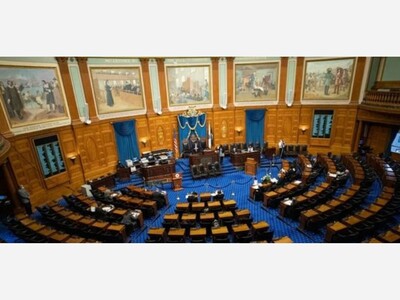
Thursday, the Massachusetts House of Representatives passed energy affordability legislation that would result in over $9 billion in savings for utility ratepayers over the next 10 years. The bill makes a one-time funding reduction to the Mass Save program, diverts environmental compliance payments from electricity suppliers back to residents, and positions Massachusetts to further diversify and modernize its energy grid.
“This legislation is a step forward in tackling the continuously rising heating bills our constituents are facing with the frigid temperatures and record snowfall we’ve beenseeing this winter,” said State Representative Jeffrey N. Roy (D-Franklin). “This bill focuses on long-term needs and the deployment of clean energy to build a more reliable grid while lowering costs for ratepayers. I want to thank House Speaker Mariano for his support of this bill and Chair Michlewitz and Chair Cusack for their work on this critical issue.”
In an effort to lower energy prices in the near term, despite volatile gas and electricity prices, the House bill:
Reduces the Mass Save budget by $1 billion for immediate ratepayer savings,
prioritizing cuts to the plan’s marketing, advertising and administrative budgets.
Mass Save is primarily funded by utility ratepayers through a mandatory charge
on their gas and electric bills.
> The bill also tasks the Office of the Inspector General with a review of
Mass Save to ensure that the program and its administrators are efficiently
and effectively using ratepayer dollars. The report is due by July 1, 2027.
Returns 70 percent of Alternative Compliance Payments (ACP), which are fees
paid by energy suppliers for not meeting renewable energy standards, to
customers until July 1, 2029.
> After July 1, 2029, the Department of Energy Resources (DOER), in
consultation with MassCEC, mandates that 70 percent of ACP payments
be returned to ratepayers in any year where money in the funds exceeds
the predicted level by 2 percent and energy costs are a substantial burden
to residents of the Commonwealth.
Reduces net metering credit amounts, which are a significant surcharge on
electric bills
Requires distribution companies and gas companies to provide discounted rates
for low-income customers and eligible moderate-income customers
Requires that any standard residential default service rates cannot be changed
more frequently than once every six months
Establishes an electric rates task force to advise and make recommendations on
the current and future cost of electricity in the Commonwealth with a report due
by September 30, 2027
The House bill also brings more energy onto the grid and protects the workforce during
the transition to clean energy. The bill:
Expands the Commonwealth’s energy procurement authority by authorizing
DOER to competitively solicit environmental attributes or energy services and
negotiate and enter into long term contracts
Requires DOER to establish a state-led offshore wind pre-development and
project acceleration program to enable the Commonwealth to partner with
offshore wind developers to further the Commonwealth’s goals. The bill also
extends from June 30, 2027 to June 30, 2029 the deadline for cost-effective long-
term contracts for offshore wind energy generation.
Allows DOER to develop a statewide energy storage incentive program to
encourage the continued development of energy storage resources connected to
the electric distribution system.
Allows for smart solar permitting to get more projects online faster
Removes barriers for nuclear energy by repealing chapter 503 of the acts of
1982, which established requirements for voter approval and legislative
certification of any new nuclear power plant or any facility for the disposal or
storage of low level radioactive waste in the Commonwealth.
Allows for high voltage transmission lines on state highways
Requires labor peace agreements for geothermal energy projects to help support
and create jobs, adds prevailing wage requirements for work on thermal energy
networks, and requires transition plans for gas workers during the transition to
clean energy.
The House bill also addresses predatory practices by certain suppliers, which impact
consumers while certain utilities benefit through business practices that result in higher
utility costs. The bill:
Creates a real-time, online, retail residential customer bill assessment dashboard
with: explanations of customer bill components; and an analysis of the benefits of
certain programs, procurements and investments.
Adjusts the reporting requirements for electric and gas companies, transmission
companies, distribution companies, suppliers and aggregators and suppliers of
natural gas to require quarterly reporting.
Protects consumers by restricting predatory marketing practices by competitive
electric suppliers by eliminating automatic renewals and variable rate contracts,
by requiring more transparency for consumers, and by establishing new licensing
requirements for door-to-door and telemarketing firms.
Allows municipalities to opt out of competitive electric supply
Requires utility audits and approvals for asset condition projects that are
projected to cost more than $25 million
Requires gas companies to implement default budget billing for residential
customers
The bill passed the House of Representatives 128-27 and now goes to the Senate for
consideration.


Patchy rain nearby, with a high of 58 and low of 44 degrees. Patchy rain nearby for the morning, clear overnight.