67° and Light rain



Image
If you have any questions about this week's report, e-mail us at bob@beaconhillrollcall.com or call us at (617) 720-1562.
Beacon Hill Roll Call
Volume 51 - Report No.30
July 20-24, 2026
Copyright © 2026 Beacon Hill Roll Call. All Rights Reserved.
By Bob Katzen
GET A FREE SUBSCRIPTION TO MASSTERLIST – Join more than 30,000 people, from movers and shakers to political junkies and interested citizens, who start their weekday and Saturday mornings with MASSterList—the popular newsletter that chronicles news and informed analysis about what’s going on up on Beacon Hill, in Massachusetts politics, policy, media and influence. The stories are drawn from major news organizations as well as specialized publications.3
MASSterList will be e-mailed to you FREE every Monday through Saturday morning and will give you a leg up on what’s happening in the blood sport of Bay State politics. For more information and to get your free subscription, go to: www.massterlist.com
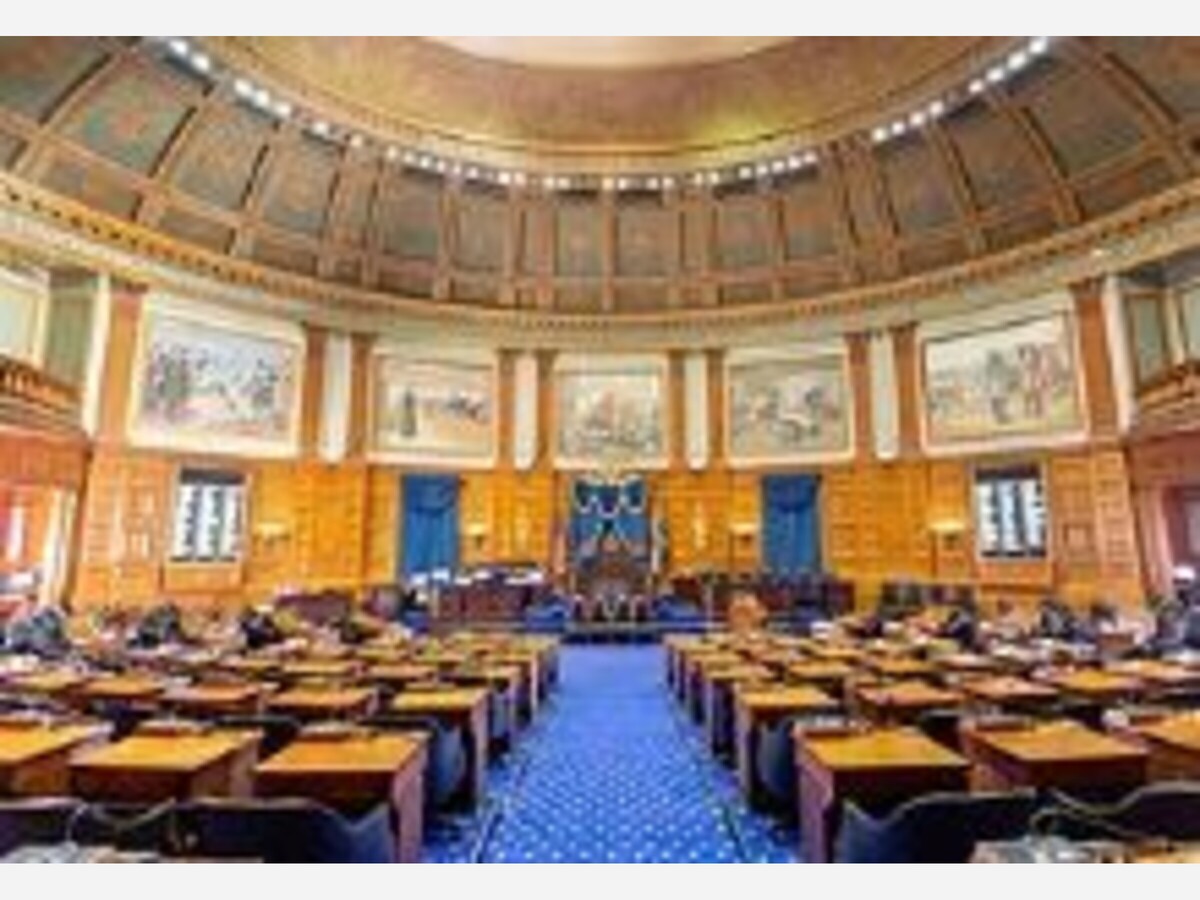
THE HOUSE AND SENATE: Beacon Hill Roll Call reports local representatives' and senators' votes on roll calls from the week of July 20-24.
ABORTION (H 5595)
House 119-33, approved and sent to the Senate legislation that would loosen restrictions on abortions that can be performed after 24 weeks of gestation. The bill removes existing requirements that limit abortions at 24 weeks of pregnancy or later to four specific medical circumstances, and instead allows licensed physicians and providers to rely on their best medical judgment when caring for patients.
Supporters said that under current law, the four specific categories do not account for the full spectrum of medical conditions encountered by women and their doctors: protecting the patient's life or physical or mental health, or cases involving a lethal fetal anomaly or a grave fetal diagnosis.
“Throughout relentless attacks on reproductive rights, the Massachusetts House has prioritized the fundamental rights and health care of its residents,” said sponsor Rep. Christine Barber (D-Somerville). “This bill continues that work. It ensures access to care by empowering physicians to use their professional judgment to make decisions in the best interest of their patients. Pregnancy is complex, and this bill eliminates barriers and guarantees medical expertise as the standard of care. It comes down to a simple, but powerful conviction: decisions about abortion care must remain between a patient and their provider. No one else.”
"The goal of passing this legislation is simple. Medical decisions should be made by a patient and their doctor,” said sponsor Rep. Lindsay Sabadosa (D-Northampton). “Massachusetts has one of the best health care systems in the country, and patients should be able to rely on their providers to deliver medically appropriate care without restrictions that can fail to account for the complexity of individual medical circumstances. By removing those barriers, we can ensure that no one has to leave Massachusetts to receive the care they need."
The Massachusetts Family Institute said in a press release that despite clear public outcry, the Massachusetts House passed what the group called the “Radical Abortion Expansion Bill.” They said that the bill removes virtually all remaining restrictions on abortion in Massachusetts. It allows abortions past 24 weeks with no requirement of medical justification, meaning abortions could be performed at full term, just days before natural birth, for any reason or no reason at all. While abortion proponents argue that late-term abortions are rare, expanding this barbaric practice does serious damage to our society’s moral foundation.
“The good intentions of this bill's sponsors are gravely misplaced,” said Myrna Maloney Flynn, the president of Massachusetts Citizens for Life “As written, their abortion-up-to-birth bill permits one provider — not even a physician — to subjectively decide that any unborn infant can be killed, even babies capable of surviving outside the womb and feeling pain within it. Just as concerning is the fact that the bill endangers women, since late-term abortions are far more complex and carry greater risk. Yet legislators want to allow these abortions outside of hospitals. Women experiencing unimaginable, heart wrenching pregnancy complications absolutely deserve all the support they need, but that support is not what this bill provides. Instead, this bill increases risks to women’s safety, allows gruesome violence against unborn children and grows abortion industry profits via taxpayer-funded late-term procedures.”
Rep. Kelly Pease (R-Westfield) said he was blindsided by the legislation and called abortion a "terrible thing." "I think most of our caucus was [blindsided]. It's like, where did this come from? I don't see how I'm going to be in favor of a bill that allows babies over six months to be terminated when they're probably viable outside the womb, unless there's extenuating circumstances, and this kind of just takes away some of the safeguards that were in place before."
A “Yes” vote is for the bill. A “No” vote is against it.)
Rep. Jeffrey Roy Yes
EXEMPT INCOME FROM OVERTIME AND TIPS FROM THE INCOME TAX (S 3178)
Senate 7-32, rejected an amendment that would exempt from the state’s 5% income tax, up to $12,500 of income from overtime and up to $25,000 of income from tips,
Amendment sponsor Sen. Ryan Fattman (R-Sutton) said his amendment will put more money back in the pockets of hardworking individuals including restaurant workers, construction workers and countless other individuals who are doing everything right. He said they are working overtime, picking up extra shifts, relying on tips and yet they feel like they're falling further behind because the cost of living has exploded and housing prices have climbed beyond the reach of many first-time homeowners. He noted that tipped workers earn their income by providing excellent service and putting in long hours and argued that if you work more, you should keep more of what you earn.
Sen. Mike Rodrigues (D-Westport) said that this amendment is responding to something real because service workers face the same cost of living pressures as every other resident in the state and deserve a break. But he added that the Senate should not be adopting this amendment at this time because there are serious unanswered questions like what separates voluntary overtime from mandatory overtime and how are tipped pools treated? He noted that the Legislature has already created better ways to help workers by increasing the Earned Income Tax Credit to 40 percent of the federal credit, expanding the child and family tax credit and raising the senior circuit tax break.
“It's unfortunate Massachusetts lawmakers did not give this tax cut to working people,” said Paul Craney, executive director of the Mass Fiscal Alliance. “Many retail workers benefit largely from tips and exempting the state income tax to their tips which mean a five percent raise for many retail workers. The Massachusetts state Senate missed a great opportunity to help keep more money in the pockets of working people.”
(A “Yes” vote is for the amendment exempting some overtime and tips income from the income tax. A “No” vote is against the exemption.)
Sen. Rebecca Rausch No Sen. Karen Spilka President rarely votes
DEATH TAX/ESTATE TAX (S 3178)
Senate 5-34, rejected an amendment that would abolish the tax that the estates of people who die are required to pay following their death, before the money is distributed to any beneficiary. Current law only exempts the first $2 million and then imposes the tax on the remainder based on a graduated rate schedule ranging from 7.2% for estates just over $2 million to 16% for estates over $10 million.
Most Republicans are against this tax and coined the name “death tax” to imply that the government taxes you even after you die. Most Democrats support the tax and call it an “estate tax” to imply that this tax is only paid by the wealthy.
Amendment supporters said this regressive tax is unfair and noted that Massachusetts is losing many residents who move to other states where this tax does not exist. They noted it is not fair to tax this money when a person dies because the person already paid taxes on it when he or she was alive.
Amendment opponents said the state cannot afford the loss in revenue which would be hundreds of millions of dollars. They noted that recently the Legislature approved and the governor signed into law a bill that increased from $1 million to $2 million the amount of money that is tax exempt from this tax.
(A “Yes” vote is for the amendment abolishing the tax. A “No” vote is against abolishing it.)
Sen. Rebecca Rausch No Sen. Karen Spilka President rarely votes
CHAPTER 62F – CHANGE WHAT TRIGGERS A REFUND TO TAXPAYERS (S 3178)
Senate 31-8 approved an amendment that would change the conditions under which a current law (known as 62F), approved by voters on the 1986 ballot, is triggered. That law requires that annual tax revenue above a certain amount collected by the state go back to the taxpayers. The amendment would only allow the law to be triggered if “the net state tax revenues in the fiscal year are less than 7.5 per cent of the total statewide personal income for the calendar year ending in the fiscal year as determined by the Bureau of Economic Analysis in the United States Department of Commerce.”
“Our modern-day economy is completely different from what it was back in 1986 when Chapter 62F was enacted,” said amendment sponsor Sen. Jason Lewis (D-Winchester). “Unfortunately, Chapter 62F uses a flawed method of calculating allowable revenue and economic growth from year to year that only considers income from wages and salaries, instead of a more comprehensive model that includes other income from gig economy work and passive income sources such as capital gains, which are both growing sources of income for residents. Currently, wages and salaries only make up just over 50% of total personal income in Massachusetts—a significant decline since 1986 which hasn’t been accounted for.”
Lewis continued, “With this major shift in the state’s economy, we need to update our tax policies to stay in line with it. [My] amendment respects the will of the voters who implemented Chapter 62F by keeping its central cap and formula in place while adding a simple update to take total personal income into account as well when triggering refunds to more accurately reflect the state of the modern economy. Refunds could only go into effect if net state tax revenues in the fiscal year are 7.5% or more of the total statewide personal income for the calendar year as determined by the Bureau of Economic Analysis in the U.S. Department of Commerce.”
“This amendment would undermine that same voter-approved policy by treating those excess revenues as government funds rather than taxpayer funds,” said Sen. Ryan Fattman (R-Sutton) who opposed the amendment. “That contradicts the will of the voters, who already decided this issue. Reversing that outcome would represent a significant breach of public trust. It also does not promote economic development or make Massachusetts more affordable, which are the stated goals of this bill."
“The voters of Massachusetts made themselves explicitly clear when 62F was first established that excess tax revenue collected by the state should be returned to the taxpayers,” said Sen. John Velis (D-Westfield) who also opposed the amendment. “Dramatic changes like these to our state’s only tax rebate law should again be decided by the voters themselves, which is why I opposed the amendment.”
(A “Yes” vote is for the amendment that only allows the law to be triggered if the net state tax revenues in the fiscal year are less than 7.5 per cent of the total statewide personal income. A “No” vote is against the amendment.)
Sen. Rebecca Rausch Yes Sen. Karen Spilka President rarely votes
ALSO UP ON BEACON HILL
$575 MILLION ECONOMIC DEVELOPMENT PACKAGE (S 3178) - The Senate approved, on a voice vote, without a roll call, a $575 million economic development package. Senators added millions of dollars in local projects for their districts to the original bill proposed by the Senate Ways and Means Committee.
The House has already approved a different version of the measure and a conference committee will hammer out a compromise version.
Provisions in the Senate bill include $100 million to support and promote economic growth and job creation in the defense sector; $75 million to support the development and application of AI; $25 million to support downtown and main street vitality in Massachusetts cities and towns; $2.5 million to help convert vacant storefronts into pop-up opportunities for new small businesses; $20 million to support construction of early stage and high growth business; $25 million to support arts, culture and the creative economy; and aiming to stop Cryptocurrency ATM misuse by fully banning the operation of these kiosks. Supporters said that scammers in recent years have directed older adults to use crypto kiosks to send money which is often not recoverable when the fraud is discovered, leading some seniors to lose their entire life savings.
Other provisions require that large AI developers are complying with new safety requirements by requiring independent, third-party safety audits; criminalizing the creation, possession or sharing of AI-generated child sexual abuse material (CSAM), in response to new AI technology and computer programs capable of generating synthetic images that are indistinguishable from real photos; prohibiting the possession, operation, manufacture or sale of robots that are equipped with weapons—including firearms, chemical agents, weaponized lasers and explosives.
The package also includes creating a group to study the feasibility of a future international soccer tournament to be held in Massachusetts; making music affordable by reining in predatory ticket scalping and instituting a 110% cap on prices charged by ticket resale platforms for music concert tickets; giving cities and towns the option of re-establishing “Happy Hour” discounted alcohol sales policies; allowing cities and towns to permit public alcohol consumption in designated outdoor districts; increasing the production of new housing units through automatic two-family zoning across Massachusetts; and creating safety rules for fast electric scooters and e-bikes.
“Today the Senate took action to maintain the commonwealth’s economic edge while giving Massachusetts residents, families and businesses the best bet at success,” said Senate President Karen Spilka (D-Ashland). “The bill we passed today will help small businesses cut through red tape, provide opportunities for new families to find a home they can afford and set our state up to face the challenges and embrace the opportunities of the coming years.”
“It’s critically important to keep the Massachusetts economy on the cutting edge, and this economic stimulus package does just that and more,” said Sen. Mike Rodrigues (D-Westport), chair of the Senate Committee on Ways and Means. “This bill hits all sectors of the state’s economy, jumpstarting scientific research, spurring housing development, investing in workforce development and business growth; supporting the defense industry and setting limits on the overreach of artificial intelligence. With the federal government no longer a partner, we need to continue to be ambitious and utilize the tools that we have to grow and develop the economic engine of the commonwealth.”
“We have a responsibility to invest in the future and to create opportunity for everyone who calls Massachusetts home,” said Sen. Barry Finegold (D-Andover), Senate chair of the Committee on Economic Development and Emerging Technologies. “I’m proud this economic development bill threads that needle, by strengthening our leadership position as a hub for industries of the future while uplifting small businesses and working families who are the backbone of our economy.”
“Senators did not have the interests of the taxpayers in mind when passing the economic development bill,” said Paul Craney, the executive director of the Mass Fiscal Alliance. “All it does is spend more taxpayer money and make it harder for a tax rebate to occur. If senators want to help make Massachusetts more affordable, they should cut or eliminate broad based taxes. Spending more tax dollars will never do anything but continue to make our state more expensive to live in and do business in.”
SUPPORT SURVIVORS OF SEXUAL ABUSE – Gov. Healey held a ceremonial signing for two new laws in the state budget that she already signed on July 9. The laws strengthen protections for young people, support survivors of sexual assault and hold offenders accountable. These include the elimination the statute of limitations for rape cases when new DNA evidence identifies a suspect, as well as a provision to close a loophole that allowed adults in positions of authority to exploit 16- and 17-year-olds.
“As a former prosecutor and attorney general, I spent years working alongside survivors of sexual violence,” said Healey. “I saw firsthand the trauma they carry, and the extraordinary courage it takes to come forward. I also saw the devastation caused when our laws don’t do enough to protect survivors and hold offenders accountable. These new laws close dangerous loopholes, strengthen protections for children and make sure survivors have a better opportunity to seek justice. While no law can change what survivors have endured, we can take action to make our laws fairer, our communities safer and help survivors get the justice they deserve.”
"This is what it looks like when we listen to survivors and act,” said Senate President Karen Spilka (D-Ashland). “Closing these loopholes means predators can no longer hide behind our laws instead of facing them. Because of this budget, we now have the power to hold accountable anyone who has abused a position of trust to harm kids, and to get survivors the justice they deserve.”
“For too long, our laws have allowed adults in positions of authority and trust to exploit the very children they are supposed to protect and then hide behind a claim of consent,” said Sen. Joan Lovely (D-Salem). “That ends now. No figure of authority should ever be able to groom or assault a young person and walk away without accountability. Closing this loophole has been one of the most personal and important fights of my career, and I am proud that we got it done for the children and families of the commonwealth.”
ALLOW CONSUMERS TO USE INSURANCE ADJUSTERS (S 785) – The House, on a voice vote without a roll call, gave initial approval to legislation that would prohibit an insurance company from including in an insurance policy, a rider that prohibits the insured from hiring or using a public insurance adjuster or a public insurance adjusting firm. The measure has already been approved by the Senate. Additional approval is needed in each branch prior to the bill going to Gov. Maura Healey.
"An insured that has paid its premiums faithfully should have the choice to hire a public adjuster qualified to read the policy and get the claim paid,” said sponsor Sen. Joan Lovely (D-Salem). “With the House advancing this bill, both branches have now said plainly that a clause taking that choice away does not belong in a Massachusetts insurance policy … My hope is that we finish the work and get this to the governor before the session closes.”
“These adjusters provide an invaluable resource to consumers by walking them through every step of filing an insurance claim and using their professional experience to negotiate directly with the insurance companies,” said co-sponsor Rep. Brad Jones (R-North Reading). “[The bill] will ensure that these important protections remain in place for Massachusetts residents.”
MAKE ASPARAGUS THE OFFICIAL STATE VEGETABLE (H 5088) – The House, on a voice vote without a roll call, gave initial approval to a bill, requested by some third-grade students at Hadley Elementary School, to make asparagus the official state vegetable. Other areas in the nation are also working to designate their state as the asparagus capital of the world.
"Asparagus is woven into the history of the Pioneer Valley, and 'Hadley Grass' once supplied 80 percent of the nation's crop,” said Rep. Homar Gomez (D-Easthampton). “Designating it the official state vegetable honors the farmers who built that legacy and gives Massachusetts growers a marketing edge, the same way state-fruit status has boosted our cranberry industry. I'm especially proud that this effort was driven by Hadley third-graders, whose civic engagement shows exactly why this recognition matters.”
“When a classroom filled with passionate third graders advocates for asparagus to become the official state vegetable, I listen closely,” said Senate sponsor Sen. Jo Comerford (D-Northampton). “It was inspiring to meet with these students at Hadley Elementary School as they shared the history and regional significance of asparagus ... I am grateful to these young people for reminding us how democracy works.”
OFFICIAL STATE CRUSTACEAN (H 5335) The House gave initial approval to a bill that would make the American lobster the official state crustacean.
"This bill is about celebrating and uplifting a significant sector of the state’s blue economy, our historic maritime culture and a sustainable fishery," said House sponsor Rep. Joan Meschino (D-Hull). "I am glad to file this bill in partnership with the Massachusetts Lobstermen Association and help to honor a crucial industry in the commonwealth."
"The American lobster is an iconic part of Massachusetts' coastal heritage, economy and identity,” said Senate sponsor Sen. Patrick O’Connor (R-Weymouth). “Designating it as our official state crustacean recognizes the generations of fishermen and coastal communities whose livelihoods have been built around this remarkable species and celebrates an industry that remains part of the soul of the commonwealth.”
ACCESSORY DWELLING UNITS (ADUs) – The Healey Administration announced the launch of phase one of a statewide Accessory Dwelling Unit Incentive Program that will help homeowners determine whether building an ADU is right for their property, including understanding site conditions, local permitting requirements, utility needs, preliminary design options and high-level cost estimates before investing significant time and resources in an ADU project. ADUs, also known as granny flats or in-law apartments, are small residential living spaces that are located on the same lot as another home.
"Massachusetts needs to build more homes, and ADUs are one of the fastest ways to create new housing in communities across our state," said Gov. Healey. "Our Affordable Homes Act made it easier to build ADUs, and we saw major interest from homeowners. Now we're giving them the tools they need to turn an idea into reality, creating more housing options while helping families stay in the communities they love."
“Homeowners are excited about ADUs, but many do not know where to start,” said Rachel Heller, executive director of the Massachusetts Housing Partnership. “A feasibility study gives a family an objective, professional assessment of what is possible on their property, what it may cost and what hurdles need to be addressed before they invest significant time and money.”
ORDER OF NOVEMBER BALLOT QUESTIONS – Secretary Of state Bill Galvin released the ballot position of the nine questions that will appear on the November 3, 2026 ballot.
Ballot question numbers this year were assigned at the direction of First Deputy Secretary Michelle Tassinari, the Director of the Elections Division. The questions were not ordered randomly but instead were ordered in a manner intended to maximize space on the ballot, with the length of the question summaries being the primary consideration.
Galvin’s office said that with so many questions, ballots in most cities and towns are expected to be 2- to 3 pages long. The length of each community’s ballot will depend on the number of offices and candidates running in that community, whether the ballot must be printed in more than one language and any local questions that may be added to the ballot by the city or town.
Here are the ballot positions of the nine questions:
Question 1: Expand the Public Records Law - Would make most records held by the Legislature and the governor’s office public records under the Massachusetts Public Records Law. It exempts documents related to the development of public policy and communications between legislators and their constituents, if those communications are reasonably related to a constituent’s request for assistance in obtaining government-provided benefits or services or interacting with a government agency.
Question 2: Allow collective bargaining for Committee for Public Counsel Services (CPCS) employees: Would allow employees of the CPCS to form a union.
Question 3: Eliminate political party primaries - Would implement All-Party State Primaries, known as Jungle Primaries, that would eliminate political party primaries for state elections and instead establish a system where there would be a single, all-party primary in which all candidates, regardless of their party affiliation, would be listed on one ballot, and voters could vote for any candidate on the ballot. The two candidates receiving the most votes in the primary would advance to the general election.
Question 4: Election Day registration - Would allow prospective voters to register and cast a ballot in a single trip to the polls on Election Day. Current law does not allow same-day registration.
Question 5: Surplus tax - Would require revenue generated from the recently voter-approved Millionaire Tax to count toward the allowable state tax revenue limitations, under Chapter 62F, which provides that whenever revenue collections in a fiscal year exceed an annual cap tied to wage and salary growth, the excess is returned to taxpayers.
Question 6: Create Natural Resource Conservation Fund - Would place sales tax revenue from sporting goods like golf clubs, RVs and camping gear into a new "Nature for All Fund" that sponsors say could generate $100 million annually for water and nature conservation and restoration efforts.
Question 7: Single-family homes - Would make it easier for residents to purchase a home by updating zoning rules including allowing single-family homes to be built in a residentially zoned area as long as the land on which it is to be constructed is at least 5,000 square feet, has at least 50 feet of land bordering the street, road or public way that it faces and has access to public sewer and water services.
Question 8: Prohibit retail sale of adult recreational-use marijuana - Would repeal the current laws that legalize, regulate and tax the retail sale of adult recreational use marijuana.
Question 9: Firearms regulations – Would repeal the 2024 gun control law that strengthened Bay State gun controls regulations.
QUOTABLE QUOTES
“Every wrong-way crash is a reminder that we can and should do better to prevent the heartbreak, loss and generational pain caused by preventable wrong-way driving accidents. While no law can undo that pain, we have a responsibility to learn from these tragedies and do everything in our power to prevent them from happening again. This [bill] will save lives and cannot happen soon enough.”
---Sen. Paul Feeney (D-Foxborough) on Gov. Healey signing into law, as part of the fiscal year 2027 state budget, a provision establishing a statewide strategy to prevent wrong-way driving incidents, enhance roadway safety and help save lives across the state.
“We understand the state is dealing with a federal administration recklessly eliminating longstanding, critical funding communities have relied upon for decades. But what we are expecting from our school districts, libraries and communities to shoulder is not sustainable. Unprecedented times call for unprecedented action and we’re urging state leaders to act now.”
---American Federation of Teachers Massachusetts President Jessica Tang urging the Legislature to take quick action on the supplemental budget Gov. Healey filed to support public schools and the students they serve.
“Massachusetts residents and businesses are already struggling with the high cost of health care. Nobody can afford massive increases in their health insurance premiums on top of that. [Insurance] Commissioner Michael Caljouw and his team are always looking for ways to lower people’s costs – whether that’s by capping co-pays and deductibles or removing prior authorizations. Now, he’s saving people tens of millions of dollars next year by negotiating with affordability as his focus.”
---Gov. Healey announcing that the Division of Insurance has negotiated down proposed rate increases from seven health insurers, saving Massachusetts residents and businesses a projected $72 million in health care premiums for 2027.
“For months, the status of the Strait of Hormuz has heavily influenced oil and gas markets and the latest developments in the war have shown again how quickly that influence can impact what drivers pay at the pump. Where prices head next will depend on a combination of gasoline inventories, demand and the war with Iran.”
---Mark Schieldrop, senior spokesperson for AAA Northeast, noting that gasoline prices are spiking back above $4 a gallon.
HOW LONG WAS LAST WEEK’S SESSION?
Beacon Hill Roll Call tracks the length of time that the House and Senate were in session each week. Many legislators say that legislative sessions are only one aspect of the Legislature’s job and that a lot of important work is done outside of the House and Senate chambers. They note that their jobs also involve committee work, research, constituent work and other matters that are important to their districts.
Critics say that the Legislature does not meet regularly or long enough to debate and vote in public view on the thousands of pieces of legislation that have been filed. They note that the infrequency and brief length of sessions are misguided and lead to irresponsible late-night sessions and a mad rush to act on dozens of bills in the days immediately preceding the end of an annual session,
During the week of July 20-24, the House met for a total of five hours and six minutes and the Senate met for a total of 17 hours and 29 minutes.
Mon. July 20 House 10:59 a.m. to 11:09 a.m.
Senate 11:03 a.m. to 11:19 a.m.
Tues. July 21 No House session.
No Senate session
Wed. July 22 House 11:00 a.m. to 3:37 p.m.
Senate 1:06 p.m. to 5:49 p.m.
Thurs. July 23 House 11:00 a.m. to 11:19 a.m.
Senate 11:47 a.m. to 12:17 a.m. (Friday)
Fri. July 24 No House session.
No Senate session.
Bob Katzen welcomes feedback at bob@beaconhillrollcall.com
Bob founded Beacon Hill Roll Call in 1975 and was inducted into the New England Newspaper and Press Association (NENPA) Hall of Fame in 2019.


Overcast, with a high of 84 and low of 63 degrees. Fog during the morning, overcast in the afternoon,