78° and Clear



Image
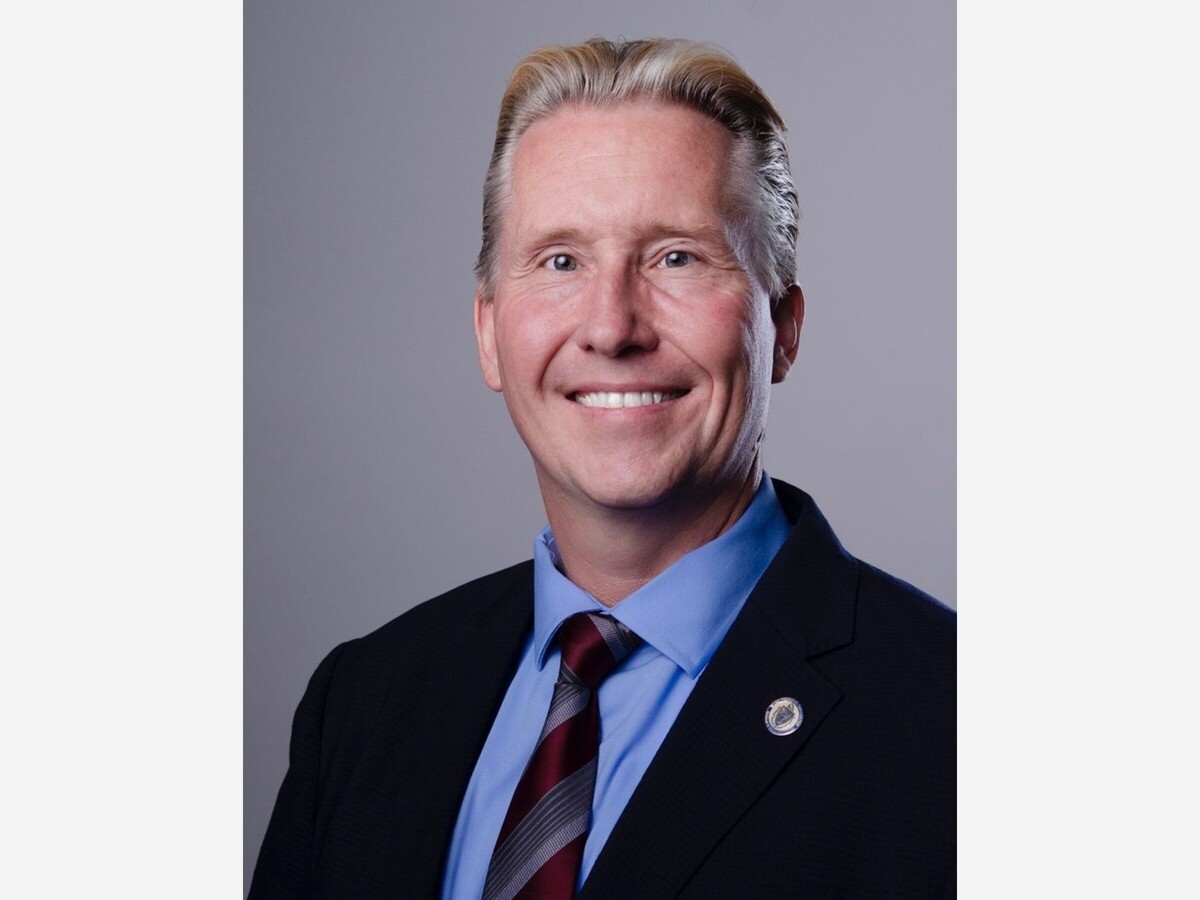
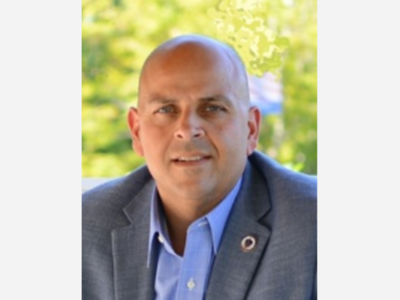
Norfolk County Sheriff Patrick McDermott
Buckle up.
That was the message Tuesday from the Legislature's budget-writing committee to the state's county sheriffs, a group that attracted the attention and ire of lawmakers with their latest request to cover budget overruns last year. Nine of the state's 14 sheriffs sat shoulder-to-shoulder and both defended their work and pledged to be partners in reforming the system.
Though not all spoke, the following sheriffs were present for the budget hearing in Foxborough: Cahillane, Cocchi, Evangelidis, Dukes County Sheriff Robert Ogden, Essex County Sheriff Kevin Coppinger, Franklin County Sheriff Lori Streeter, Norfolk County Sheriff Patrick McDermott, Plymouth County Sheriff Joseph McDonald, and Suffolk County Special Sheriff Mark Lawhorne.
"We agree that corrective action is needed to rectify the sheriffs' budget process, to make the sheriffs whole and eliminate the supplementary funding exercise as much as possible. We do understand a lot of effort will be needed between the sheriffs, the administration and the Legislature to work collaboratively to a resolution for our situation," Hampshire County Sheriff Patrick Cahillane said. "As the inspector general's preliminary report clearly indicated, the funding of the sheriffs is problematic and this situation has been longstanding and widely known, if not openly recognized."
Last fiscal year, county sheriffs collectively presented the Legislature with a $110 million end-of-year deficit to make up. Lawmakers balked at covering the full amount of the deficiencies, and tasked Inspector General Jeffrey Shapiro with assembling a detailed accounting of sheriffs' expenditures in fiscal year 2025 and an analysis of sheriffs' offices' compliance with state finance laws among other issues.
Some sheriffs have argued, as Hampden County Sheriff Nick Cocchi did before the Joint Ways and Means Committee at a hearing in Foxborough, that "we're not overspending. We've been underfunded." He said he was hurt by the way "people stood up and said, 'We're shocked. We are shocked at the sheriff's spending.'"
"That wasn't a year, one fiscal year. That has been a compounding of fiscal year after fiscal year. And we probably should have done -- no, we should have done, as sheriffs, a better job of pulling back rather than continuing to spend. We should have done a better job," Cocchi said. He added, "There's work to be done, and we're ready to do it. But I was hurt when people looked at us and said, 'Shame on you people.'"
The preliminary report Shapiro released in early March found that many sheriffs overspend their budgets annually, possibly in violation of state finance law — but that fault laid both in appropriations and spending.
The Legislature routinely underfunds what they know the sheriffs will need, expecting to later fill in gaps with supplemental spending, the IG said. But the county offices also overspend and do not wait until they have the additional dollars in hand to spend that money, putting budgets in a deficit and forcing the Legislature's hand.
"It is apparent that the role of the sheriffs' offices may not be as narrow as some legislative leaders expect, nor as expansive as some sheriffs believe. While the creation of the sheriffs' office date back to the origins of this country, the work of the offices is set by statute. The Legislature has an opportunity to clarify such roles and responsibilities while also reforming a fundamentally broken budget process," Shapiro wrote in the report, which is due to be followed by a final report by May 31.
Key lawmakers in both chambers have indicated that the appropriations and spending process for sheriffs is an area ripe for reform. But with report due just after the Senate is expected to have passed its fiscal year 2027 budget and one month before the start of that new budget year, the timeline for reform remains unclear.
"We're going to get what that final recommendation looks like, and buckle up. I guess we're all going to have to be prepared together," said Rep. Todd Smola, the committee's top Republican. "I think one of the things that's extremely clear is that our system for funding sheriffs is poor at best. And I think we have as much of the blame as anybody, because we've kind of perpetuated it over time, and that's problematic. I think most of us see this as a structural problem."
While independently elected, the sheriffs were run jails and houses of correction around the state rely on state funding for their operations, and the Legislature has traditionally filled in funds to cover county budget gaps.
Sen. Paul Feeney, the Foxborough Democrat who chaired the hearing, said he was "hearing a lot of this renewed spirit of collaboration on trying to figure this out, and I hope that's the case among among everybody."
Cocchi held a press conference Wednesday to announce a budget reduction plan that will see about 50 jobs under his office eliminated or redefined, and external law enforcement partnerships that have sheriff's deputies conducting traditional policing for surrounding towns cut back. Cocchi said the first phase of this plan is expected to save between $3.6 million and $4 million.
Cocchi's office said that while the sheriff believes the partnerships he will scale back "go hand-in-hand with good correctional practices, it is clear that his view is not shared by everyone on Beacon Hill."
"In light of that perspective, and in the absence of clear direction about how those activities should be funded going forward, we believe the responsible course is to begin scaling back those external operations," Cocchi said in a statement. "If the financial situation in the Commonwealth improves, we will request prior approval of funding through the legislature to again support the public safety gaps and deficiencies in Hampden County. But as of now, this is the sad reality we are facing."
The sheriff alluded to his budget-cutting plan at the hearing.
"I may have had initiatives that aren't in the scope of everyday work. They're being reeled back as of today. When I mean as of today, I put 50 layoff notices out. And we can live to fight another day on that front," he said. "Today, we need to get in compliance with a number that makes sense to each of these sheriffs and their sheriff's offices, and we need to be respectful to the process. We're willing to do that."
Cocchi's announcement Wednesday said his deputies have been providing "full patrol coverage on two shifts, seven nights per week" in Palmer, with deputies handling calls for service, patrol duties, and community policing. His deputies also maintain a continuous presence at Springfield's Union Station, conduct targeted speeding details and traffic patrols for West Springfield's police department, assist with large-scale events in Holyoke, patrol the Connecticut River, and "act as force multipliers" when Chicopee has low police staffing.
Those efforts will all come to an end unless the costs are paid or reimbursed by other agencies or municipalities, the sheriff announced.
Worcester County Sheriff Lew Evangelidis, a former state representative, told committee members the Legislature should more clearly define the job of a sheriff's office and then determine budgets that recognize the differences among the 14 sheriffs.
"Everyone agrees with our core mission of care, custody and control of the inmate population. And then you have the additional services that I'm sure you all support, the idea of mental health services, substance treatment, education, reentry services, all those things. So I think what we're gonna have to do is take a look at -- you're gonna have to give us the guidance. You have to determine what do you want us to do," he said, describing himself as a "core mission guy" while mentioning that other sheriffs offer more programs. "And then the hard part is going to be come up with a reasonable budget for each of us, and they're going to be different."
Gov. Maura Healey's fiscal year 2027 budget (H 2) proposed about $759.5 million for the sheriffs, up from roughly $738.4 million in projected spending this fiscal year.
Absent from the hearing were Barnstable Sheriff Donna Buckley, Berkshire County Sheriff Thomas Bowler, Bristol County Sheriff Paul Heroux, Middlesex County Sheriff Peter Koutoujian, and Nantucket County Sheriff James Perelman.
Colin Young is the deputy editor for State House News Service and State Affairs Pro Massachusetts.

Sunny, with a high of 89 and low of 72 degrees. Overcast during the morning, partly cloudy in the afternoon, clear for the evening,